
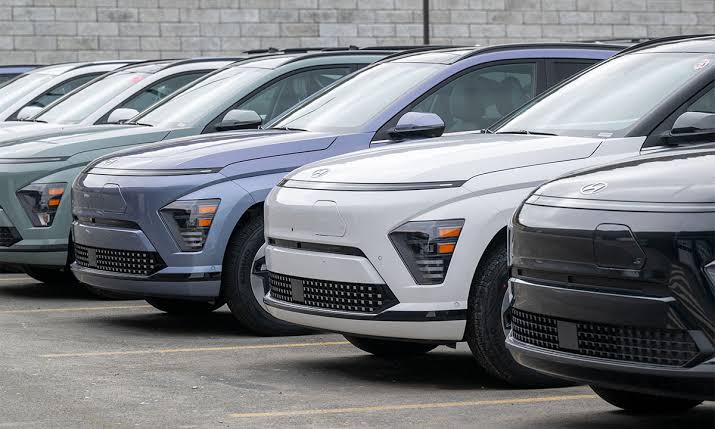
Quick Answer: Yes, you can import an electric vehicle from China, and it is a normal commercial transaction rather than a grey market gamble. What decides whether it is worth doing is not the purchase price but four checks: the tariff that applies in your market, whether the car can be homologated and registered, whether the battery can be shipped legally, and whether anyone locally can service it. Get those four right and the maths usually works. Skip one and the cheapest quote becomes the most expensive car you ever bought.
What Actually Counts as an EV Import
The phrase "electric vehicle" covers several different products, and each has a different tariff line and a different set of rules.
- Battery electric vehicles (BEV). No combustion engine, charged from the grid. Most customs tariffs classify these under HS 8703.80.
- Plug-in hybrid electric vehicles (PHEV). A combustion engine plus a chargeable battery. Usually 8703.60, and often treated differently from a pure EV for duty and incentives.
- Electric two and three wheelers. Motorcycles, scooters and e-trikes sit in different chapters entirely, usually 8711, and are the most common first import for small businesses.
- Electric commercial vehicles. Vans, light trucks and buses fall under 8704 or 8702 and face separate type approval rules.
Before you ask for a quote, ask the supplier for the exact HS code they use on their export declaration. A quote that names the model but not the code is not a quote you can cost.
The Four Checks That Decide Whether It Is Worth It
1. The tariff position in your market
This is where most business plans fail. The purchase price from a Chinese factory can look unbeatable until the duty and tax stack lands on top of it.
The European Union has applied countervailing duties on battery electric vehicles from China since 2024, in addition to the standard 10 percent import duty. The additional rate depends on the producer, and the range has run from roughly 7.8 percent to 35.3 percent. The European Commission trade portal publishes the current measures and the producer specific rates, and it is the only source worth relying on for a landed cost model.
The United States took a different route, raising the Section 301 tariff on Chinese electric vehicles to 100 percent in 2024. The Office of the United States Trade Representative maintains the official list. Other markets, including many in Africa, the Gulf and Southeast Asia, apply standard duty plus value added tax or a levy, and some offer preferential rates for EVs as a policy incentive.
The practical point: the same car can be a bargain in one country and unsellable in another. Model the tariff before you model anything else. And remember that duty is only one cost line. A payment route that lands the full invoice amount in the supplier's account, without intermediary deductions, keeps your cost base clean enough to model. That is the part of the chain a conventional rail platform can control, while the tariff is a policy fact you simply have to plan around.
2. Homologation and registration
A car that cannot be registered is a very heavy paperweight. Every market has an approval process, and Chinese domestic models are usually type approved for China first.
- European Union: whole vehicle type approval, or an individual vehicle approval route for a single unit. Requirements include conformity of production, braking, lighting, electromagnetic compatibility and, for EVs, battery safety and charging interface standards.
- United Kingdom: individual vehicle approval for a one off import, which includes a inspection of lighting, brakes, seat belts and emissions classification.
- Gulf, Africa and Southeast Asia: rules vary widely. Some markets accept a foreign approval certificate with a local inspection, others require a local type approval that a single importer cannot realistically obtain.
Ask the supplier, in writing, which approval certificates the model already holds. A manufacturer that exports in volume will have a compliance file. A trading company reselling domestic stock usually will not.
3. The battery and how it can travel
Lithium batteries are Class 9 dangerous goods. That single sentence shapes your freight options.
- Cells and packs need a UN 38.3 test summary, and the document must match the battery in the vehicle.
- Air freight is possible for small volumes but expensive and tightly regulated, with state of charge limits typically around 30 percent.
- Ocean freight is the normal route, in a container or on a roll on roll off vessel. Carriers require the dangerous goods declaration and often a reduced state of charge.
- Some ports and some shipping lines refuse damaged, used or prototype packs outright.
The IATA dangerous goods regulations set the air cargo framework that most carriers reference even for ocean bookings. If a supplier cannot produce a UN 38.3 summary within a day, treat that as a warning about the rest of their documentation too.
4. Service, software and spare parts
An EV is a computer with wheels. Two questions decide whether owners will be happy six months later.
- Can the car be serviced locally? Brakes, suspension and bodywork are ordinary. Battery diagnostics, inverters and high voltage systems are not. Without a dealer or an independent EV workshop with the right diagnostic tool, a minor fault becomes a long wait for a part.
- Does the software work outside China? Some models tie over the air updates, navigation and app features to a Chinese account or a Chinese mobile number. Region locking is real, and it is rarely mentioned in a sales brochure.
Ask for the export specification sheet: charging standard, region firmware, language support, warranty terms and the spare parts catalogue. Then find one independent workshop in your city that will touch the model before you order ten of them.
Charging Standards Are Not Universal
This catches more importers than any tariff.
- China uses the GB/T standard.
- Europe uses Type 2 for AC and CCS2 for DC fast charging.
- North America is moving to NACS, with CCS1 in older installations.
- Japan uses CHAdeMO in older infrastructure.
A car built for GB/T can sometimes be converted, but the conversion involves the charging port, the on board charger and the software. Adapters for AC charging are common. Adapters for high power DC charging are rare, expensive and often not certified for public infrastructure. If the vehicle will be charged at public stations, buy a model that ships from the factory with the connector your market uses.
Shipping an EV: What the Freight Quote Should Include
| Cost line | What it covers | Where it bites |
|---|---|---|
| Ex works or FOB price | Vehicle at factory or at port | Currency and payment terms |
| Inland haulage in China | Factory to port | Often excluded from FOB |
| Dangerous goods surcharge | Battery handling and documentation | Added late if not declared |
| Ocean freight | Container or roll on roll off | RoRo is cheaper, schedule is fixed |
| Marine insurance | Cargo cover at declared value | Under insuring is common |
| Import duty | Tariff on customs value | Depends on HS code and origin |
| VAT or sales tax | Local consumption tax | Recoverable in some structures |
| Homologation and inspection | Approval and testing | Can exceed the freight cost |
| Registration and plates | Local vehicle registration | Requires cleared duty first |
| Charging adapter or port conversion | Compatibility | Cheap part, expensive labour |
A container holds one to four vehicles depending on size and how they are racked. Roll on roll off is usually cheaper per unit but ties you to a sailing schedule and to a port that handles vehicles. Ask for both quotes on the same Incoterm, or you will compare numbers that describe different services.
Sourcing: Factory, Authorised Exporter or Trading Company
Three supplier types dominate.
The manufacturer or its official export arm. Best documentation, real warranty, minimum order quantities, and prices that reflect volume. Small importers rarely qualify directly.
Authorised distributors and export agents. They hold stock or allocation, handle the export declaration and can arrange freight. Margin sits in the price, and the paperwork is usually solid.
Trading companies. The easiest to find and the most variable in quality. Some are excellent consolidators. Others are reselling a car they do not own, which means the deposit goes to a company with no control over the factory slot.
Verify the entity, not the website. Check the business registration, ask for the export licence, ask for two shipment references on your route, and ask for a video walkaround of the actual unit with the VIN visible before the balance is paid. If the deposit is going to a personal account, stop.
Structuring the Payment So the Goods Actually Ship
The vehicle import payment has three moments, and each one should unlock something.
- Deposit, usually 30 percent. Paid against a signed proforma invoice that names the VIN or the production slot, the HS code, the Incoterm and the delivery window.
- Pre shipment inspection. A third party inspection before the balance is released. This is the cheapest insurance in the transaction.
- Balance, usually 70 percent. Paid against the bill of lading copy or the loading photos, not against a promise.
For larger orders, a documentary credit shifts the risk: the bank releases payment against documents rather than against trust. It costs money and adds days, and it is worth it when the order value is high and the supplier is new.
The payment mechanics matter as much as the structure. A wire that arrives short because three banks deducted charges creates an argument about whether the balance was paid, and that argument can hold a container at port. This is why DapsyPay is built around conventional international rails such as SEPA and ACH, with no limits on transfer size and direct delivery to the beneficiary bank account. For importers paying a factory deposit, a freight forwarder and a customs broker in the same week, bulk sending and full amount delivery remove a class of delay that has nothing to do with the car and everything to do with the banking chain.
If the money side of importing is where your operation is weakest, our guide to why cross-border invoices get paid late covers the same discipline from the receivables direction. And if you are importing into a market with currency controls, the mechanics in our breakdown of the Ethiopian birr and import payments are a useful warning about what happens when foreign exchange, not freight, is the bottleneck.
The Landed Cost Calculation, Worked Simply
Take a car with an FOB price of 18,000 dollars, heading to a market with 10 percent duty and 15 percent VAT.
- FOB price: 18,000
- Ocean freight and dangerous goods surcharge: 2,000
- Insurance at 1 percent of CIF: 200
- Customs value (CIF): 20,200
- Duty at 10 percent: 2,020
- VAT at 15 percent on the duty paid value: 3,333
- Homologation and inspection: 1,200
- Port, clearing and inland delivery: 900
- Registration and plates: 400
Total before margin: roughly 28,050 dollars, or 56 percent above the FOB price. Any plan built on the FOB number alone is understated by more than half a car. Add the working capital cost of tying up the deposit for eight weeks and the true number is higher again. Anyone comparing costs across borders runs into the same arithmetic, which our guide to tuition fees for international students in Ireland sets out from the education side.
In markets with additional trade measures, the same calculation can double. That is not a reason to avoid importing. It is a reason to do the arithmetic before the deposit.
Common Mistakes
- Comparing an FOB price with a delivered competitor price and concluding the margin is huge.
- Assuming the Chinese domestic charging standard can be adapted cheaply for public fast charging.
- Ordering a left hand drive model for a right hand drive market because it was in stock.
- Accepting a UN 38.3 summary that names a different battery pack than the one in the car.
- Paying a deposit to a personal account or to a company name that does not match the proforma invoice.
- Forgetting that registration requires the duty to be paid first, which requires the clearance to be complete.
- Buying a single unit for resale without checking whether a local workshop will service it.
- Ignoring software region locks until the first owner cannot update the car.
Frequently Asked Questions
Conclusion
Importing an EV from China is a supply chain project with a car attached. The factory price is the easiest number to find and the least useful one on its own. What determines the outcome is whether the tariff, the approval, the battery documentation and the service network all line up before the deposit leaves your account.
Do the four checks in order. Model the landed cost at the CIF value, not the FOB value. Inspect before the balance. And keep the payment chain as clean as the documentation, because a car held at port over a shortfall is the most avoidable loss in the whole transaction.
Keep Your Import Payment on Schedule
Fast transfers on conventional rails, no limits, built for bulk and business payments.
Visit dapsypay.com