
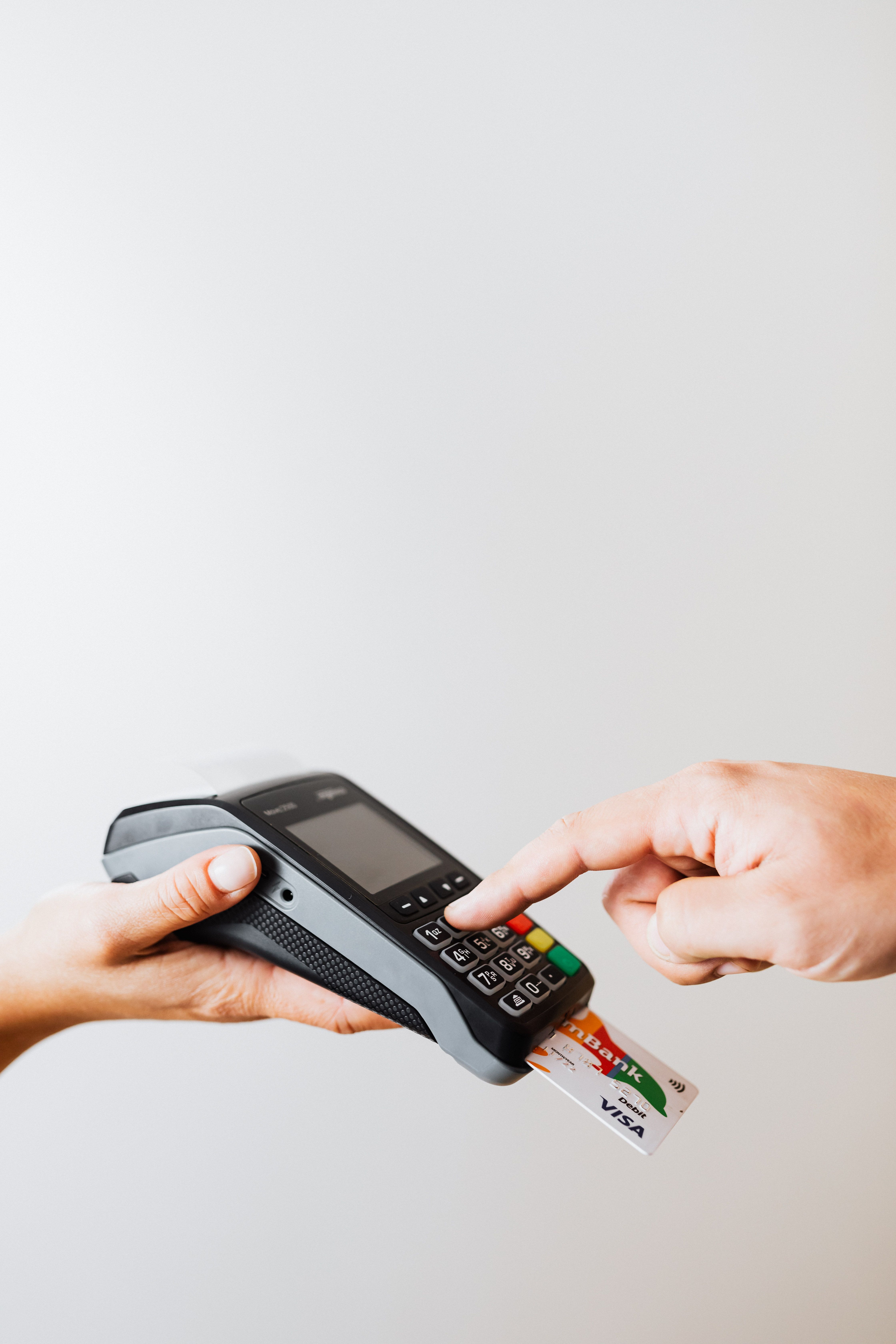
Can I Use My Debit Card Abroad
Yes, you can usually use a debit card abroad, but the card has to be enabled for international use and the merchant or ATM has to accept your card network. Expect foreign transaction fees, a possible exchange rate markup and a daily spending cap. Larger payments, such as supplier balances or deposits, are often better made by bank transfer, because cards carry low limits and can be declined.
What Happens When You Use a Debit Card Abroad
A debit card abroad works in much the same way as it does at home, with one important difference. Instead of one domestic network handling the payment, the transaction may pass through an international card network, a local acquirer and a currency conversion step. Each of those stages can add cost or friction.
At a shop or online checkout, you tap or enter your card, the merchant asks the card network for approval, and the network asks your bank. Your bank approves or declines, then the money is taken from your account. When the currency of the card and the currency of the payment differ, someone converts the money, and that conversion is where the cost usually hides.
At an ATM, the same thing happens with a cash withdrawal. You take out local currency, the machine applies its rate, and your bank may add its own charge. If the machine offers to convert for you, that convenience normally comes at a worse rate than letting your bank do the conversion.
Card networks cover a huge number of countries and merchants. You can see how one of the largest, at Visa, explains using your card when you travel. Coverage is rarely the problem. Cost and limits usually are.
The Charges to Watch
A debit card abroad can carry several separate charges. Knowing their names helps you spot them on a statement.
- Foreign transaction fee. A percentage added by your bank when the payment is in another currency.
- Exchange rate markup. The gap between the mid market rate and the rate applied to your transaction.
- ATM withdrawal fee. A fixed charge for taking cash out, sometimes from both the machine and your bank.
- Dynamic currency conversion. The ATM or terminal converts to your home currency at its own rate, often a poor one.
- Out of network charges. Some banks charge more when you use a machine outside their own network.
- Cash advance interest. On some accounts, withdrawing cash abroad is treated like a loan and interest starts immediately.
Regulators in many markets require banks to disclose these charges clearly. In the United Kingdom, for example, the Financial Conduct Authority sets rules on how fees and charges must be presented, which you can review at the Financial Conduct Authority. The rules help, but they do not remove the costs. They simply make them visible.
Why Cards Get Declined Abroad
A decline is not always a sign that something is wrong. It often means a control is doing its job.
- International use is switched off. Many cards ship with overseas use disabled for security. You have to turn it on.
- The merchant is outside your usual pattern. Anti fraud systems flag sudden spending in a new country.
- The card type is not accepted. Some merchants only take credit cards, or only take cards issued locally.
- Currency or merchant category blocks. Some issuers block certain merchant categories for online use.
- Authentication fails. Online payments may require a one time code, and if the code cannot reach you, the payment fails.
- The amount exceeds a limit. Daily and monthly caps apply even when the balance is enough.
Each of these has a fix, but the fix takes time. Tell your bank you are travelling, enable online and international use before you go, and keep a second payment method ready. A card that works in one country may still fail in another for reasons that have nothing to do with your balance.
When a Card Is the Wrong Tool
Cards are excellent for small, everyday payments. They are poor for large, time sensitive cross-border payments.
Think about a supplier who needs a balance before shipping, a university that needs a tuition payment by a deadline, or a hospital that needs a deposit to hold a date. A card might be declined for limit reasons, and even when it works, the foreign transaction fee and rate markup on a large amount can be substantial. There is also a practical problem: cards are designed for consumer payments, and some business or government recipients simply do not accept them.
For those situations, a bank transfer is the better instrument. It carries no card network fee, it moves larger amounts without a consumer style cap, and it delivers into the recipient's own bank account, which is exactly what a supplier, a school or a hospital expects.
Where a Transfer Platform Fits
That is the case DapsyPay was built for. It runs on conventional transfer rails such as SEPA and ACH, so a payment moves fast, faces no limits that would stop a larger transfer, and lands in a named bank account. The fee and the rate are shown before you confirm, which makes the total cost easy to see and easy to compare with a card.
The practical result is simple. Use a card for coffee, a train ticket or a small online subscription abroad. Use a transfer for anything that matters: a supplier balance, a deposit, tuition, rent or a medical bill. Splitting the two means each tool does what it is good at.
For a deeper look at the cost side, our guide on how to transfer money abroad without fees breaks down where the hidden margin sits, and what a domiciliary account is and how you use it explains how to hold foreign currency so you convert less often.
Debit Card vs Bank Transfer Abroad
| Feature | Debit Card Abroad | Bank Transfer |
|---|---|---|
| Best for | Small everyday payments | Supplier, tuition, property, medical payments |
| Typical limits | Low daily and monthly caps | No limits |
| Cost structure | Foreign transaction fee plus rate markup | Disclosed fee plus rate |
| Decline risk | Higher, for many reasons | Low once details are verified |
| Recipient type | Consumer merchants | Any bank account holder |
| Speed | Fast when it works | Fast on modern rails |
The right question is not which one is better in general. It is which one suits the payment in front of you.
Common Mistakes to Avoid
- Not enabling international use. A quick settings change prevents a whole class of declines.
- Accepting dynamic currency conversion. Always choose to be charged in the local currency and let your bank convert.
- Ignoring the rate. The rate applied to your card payment is a real cost, even when no fee appears.
- Using a card for a large payment. Low limits and high margins make cards a poor fit for big transfers.
- Keeping only one payment method. A backup card or a transfer route protects you when one option fails.
- Forgetting to keep receipts. Disputes are far easier to resolve when you can show what was agreed and paid.
Frequently Asked Questions
Conclusion
You can use a debit card abroad, and for small purchases it is convenient and quick. What you should not do is assume it is cheap or that it will always work. Fees, rate markups and declines are all part of the picture, especially once the payment gets large.
The practical rule is to match the tool to the payment. Cards for everyday spending. Transfers for anything with a deadline, a limit or a supplier on the other end. Kept together, they cover both sides of life abroad without forcing you to overpay on the payments that matter most.
For the payments that matter, DapsyPay offers fast transfers on conventional rails, no limits, a visible fee and delivery into the recipient's bank account, so the tool fits the job. For a look at how newer payment networks price a transfer, see network fees and settlement, and the guide to letters of credit covers the document heavy option for large first orders.
Move Larger Payments Without Card Limits
Send supplier, tuition and deposit payments on conventional rails with no limits, a visible fee and rate, and delivery straight into the recipient's bank account.
Visit dapsypay.com