
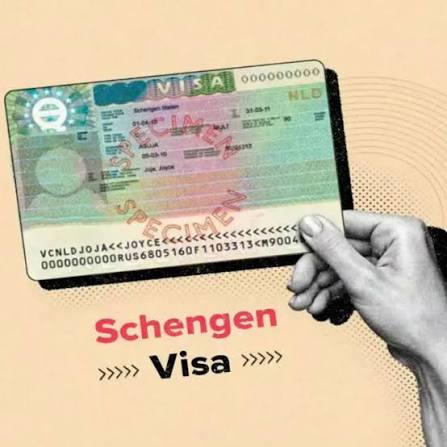
Quick Answer
What the Schengen Visa Fee Actually Covers
The visa fee is a processing charge, not a purchase. It pays for the administrative work of assessing an application: the appointment, the file review, the security checks, and the decision.
It does not guarantee approval. It is not refunded if the application is refused, and it is not refunded if you withdraw after submitting. That is why the fee should be the last thing you think about and the documents should be the first. A refused application costs the fee plus the insurance plus the travel bookings you may already have made.
The fee is set at European Union level and reviewed periodically. Because it is set centrally, shopping around consulates to find a cheaper fee does not work. What does vary, sometimes considerably, is the service charge added by the commercial centres that collect applications on behalf of consulates.
The Standard Fee in 2026
For a short stay visa, which covers tourism, family visits, business trips, and short courses of up to 90 days in any 180 day period, the current structure is as follows.
| Applicant | Visa fee |
|---|---|
| Adult, 12 years and over | 90 euros |
| Child aged 6 to 11 | 45 euros |
| Child under 6 | No fee |
| Holder of a diplomatic or service passport, where covered by an agreement | No fee |
| National of a country with a visa facilitation agreement | Reduced fee |
| Family member of an EU or EEA citizen exercising free movement | No fee, on presentation of evidence |
The reduced fee category applies to nationals of a small group of countries covered by visa facilitation agreements with the European Union, and to certain categories such as pupils and students travelling for study, researchers attending conferences, and representatives of non profit organisations under 26. These reductions are not automatic. You have to present the evidence at the appointment, and the consulate decides.
Long stay national visas, which cover study, work, and residence, are set by each country individually and are usually higher. A student visa for a Schengen country is not priced at 90 euros. Check the specific country's consulate for that figure.
The Charges That Sit On Top
The visa fee is one line in a longer bill. These are the usual additions.
Visa centre service fee. Most consulates in Africa, Asia, and the Middle East collect applications through commercial centres. The service fee is charged per application and per person, including children. It typically runs from about 20 to 40 euros, and it is not optional if that is the only route to lodge an application.
Biometrics. Fingerprints and a photograph are collected at the appointment. There is usually no separate charge, but travel to the centre is a cost, and in some countries applicants must use a specific centre in a specific city.
Travel insurance. Schengen applications require insurance covering at least 30,000 euros in medical costs, valid across all Schengen states for the whole trip. A one month policy for a younger traveller is often modest, but costs rise with age and with the length of cover.
Document costs. Bank statements, employment letters, a confirmed itinerary, accommodation bookings, and certified translations where required. In some countries, a notarised sponsorship letter or a certified birth certificate adds another line.
Optional extras. Premium lounge access, courier return of the passport, SMS updates, and photograph services at the centre. None are required, and together they can add more than the visa fee itself.
A Realistic Total Cost for an Adult First Time Applicant
A typical adult application from a country with a commercial visa centre looks like this.
- Visa fee: 90 euros
- Service fee: 25 to 40 euros
- Travel insurance for the trip duration: 25 to 60 euros
- Photographs and document copies: 5 to 15 euros
- Travel to the visa centre, sometimes with an overnight stay: variable
- Flight and accommodation bookings that can be cancelled: often no cost if refundable, but this is a risk area
That puts a realistic minimum at roughly 145 to 205 euros before travel costs. For a family of four with two adults and two children over six, the visa fee and service fee alone can exceed 400 euros.
The number to watch is the service fee per person. Some applicants focus on the 90 euro fee and are surprised at the counter when a per person service charge doubles the bill.
Where the Fee Is Paid and How
The visa fee is normally paid at the visa application centre, in local currency, at the exchange rate the centre sets. It is rarely paid directly to the consulate.
Payment methods vary by centre and country. Common patterns include card payment on site, bank deposit with a receipt presented at the appointment, and online payment during the appointment booking. Cash is accepted in some centres and not in others.
Three practical points save trouble.
First, confirm the payment method before the appointment day. A bank deposit made the same morning may not clear in time, and an unfunded appointment is a lost appointment.
Second, keep the receipt. It is part of the application and the only proof of payment if the file goes missing.
Third, expect the local currency amount to differ from the euro figure. Centres apply their own conversion and sometimes an administrative margin. Budget for a small difference rather than being caught short.
Who Pays Nothing
Several categories are exempt from the visa fee, and applicants often pay when they did not need to because they did not bring evidence.
- Children under six.
- Family members of EU or EEA nationals exercising free movement rights, with the relevant documents.
- Holders of diplomatic and service passports where an agreement applies.
- Applicants invited by certain official bodies for events, where the invitation meets the stated conditions.
- Pupils, students, and accompanying teachers travelling for study or educational purposes, and researchers travelling for research, in the categories the visa code covers.
The pattern is that exemption is documentary. If you cannot show the evidence at the counter, the fee is charged.
Refunds and Refusals
The visa fee is non refundable in almost every circumstance.
A refusal does not trigger a refund. A withdrawal after submission does not trigger a refund. A decision that takes longer than the standard processing time does not trigger a refund either.
The service fee is also non refundable, because the service was delivered: the application was received and transmitted. Some centres refund the courier fee if the passport is collected in person instead, which is why it is worth reading the centre's terms rather than assuming.
The one route that recovers money is an appeal or a fresh application. An appeal against a refusal usually has no fee at the consulate level in some countries and a fee in others, and success means the decision is reviewed, not that the original fee is returned.
Why the Fee Is the Cheapest Part of a Refused Application
Refusals are expensive for reasons that have nothing to do with the visa fee. The insurance is spent. Refundable bookings may not be fully refundable. A planned trip may need to be rescheduled at a loss. And the applicant starts again with a new fee.
That is why the documents deserve more attention than the price. The most common reasons for refusal are well documented: insufficient proof of funds, an itinerary that does not match the stated purpose, weak ties to the home country, unclear accommodation, and insurance that does not meet the minimum requirements.
If your financial evidence comes from a foreign account, remember that a bank statement is only as useful as its recency and its clarity. Statements printed the week of the appointment, with a clear account name and a visible balance history, avoid the most common documentation objection.
Paying for the Trip Itself From Abroad
The visa fee is fixed and small. The trip is neither. Flights, hotel deposits, insurance, and the spending money you carry are the real budget, and they are where the cost of moving money across borders starts to matter.
This is the part of the journey where DapsyPay fits. Payments run on conventional international rails such as SEPA and ACH, which means you can settle a hotel deposit, pay a tour operator, or fund a rental agreement in the currency the supplier expects, with fees shown upfront rather than deducted somewhere in the middle, no amount limits that force a booking to be paid in instalments, and a confirmation you can attach to a visa file if the consulate asks how the accommodation was paid.
For applicants funding a trip from a local currency account, our guide to how to transfer naira to a dollar account explains how to position the funds before you apply, since a statement that shows a sudden unexplained inflow is a common refusal trigger. And if a payment to a travel supplier stalls before departure, our post on why an international payment goes on hold explains what a review means and how to clear it. If a supplier turns out to be fraudulent rather than slow, the playbook in our guide to recovering money after a supplier payment scam is the one to follow, and the first day matters most.
Reducing the Total Without Cutting Corners
There are legitimate ways to bring the total down.
Apply through the consulate that genuinely has jurisdiction. Your main destination decides which country handles the application. Choosing a different country for convenience can lead to a refusal and a wasted fee.
Use annual multi trip insurance if you travel more than once. For two or more trips in a year, a multi trip policy often costs less than two single trip policies.
Book refundable accommodation. A booking that can be cancelled costs nothing if the visa is refused, while a prepaid rate can be lost.
Apply early but not too early. Applications can be lodged up to six months before travel in most cases. Applying early avoids premium charges for urgent appointments.
Avoid unnecessary premium services. Courier return and SMS updates are convenient. They are not required, and the money is better spent on a stronger document pack.
FAQ
Conclusion
The Schengen visa fee is 90 euros for an adult and 45 euros for a child aged six to twelve, with under sixes exempt. The real application cost is usually double that once service fees, insurance, and documents are counted.
Budget properly, bring documentary proof for any exemption, pay by the method the centre actually accepts, and treat the fee as the smallest line in a file whose strength decides the outcome. The applicants who lose the least money are the ones who spend their effort on the evidence rather than on finding a cheaper counter.
Pay the Trip, Not the Guesswork
Settle hotel deposits, tour operators and travel suppliers on conventional rails such as SEPA and ACH, with no amount limits, upfront pricing and a confirmation you can attach to a visa file.
Visit dapsypay.com