
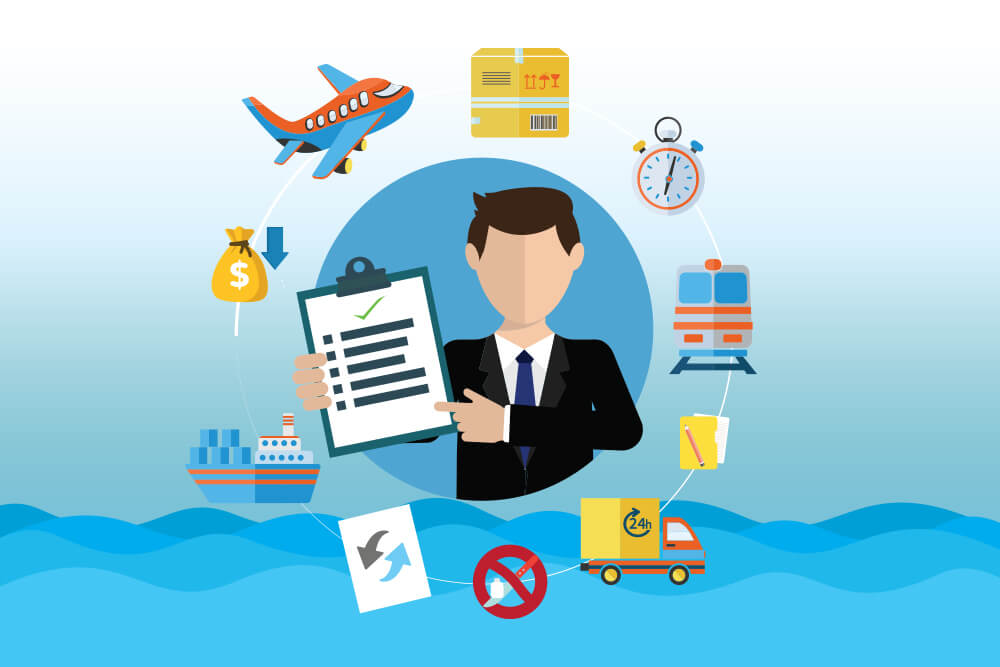
Quick Answer: A freight forwarder books space on ships, aircraft and trucks, prepares the documents, clears customs and moves cargo from a supplier door to your warehouse. Choose one by matching corridor experience to your lane, checking licensing and cargo insurance, comparing the full landed cost instead of a single freight rate, and testing responsiveness before you commit a container. A good partner saves money on the route and far more on the mistakes it prevents at origin and destination.
What a Freight Forwarder Actually Does
A freight forwarder is an arranger, not usually a carrier. The company does not own the vessel or the aircraft in most cases. It buys space from shipping lines and airlines at negotiated rates, then assembles the service around that space so you do not have to coordinate six separate companies.
The work breaks into four blocks:
- Origin handling. Booking, pick up from the supplier, export customs, consolidation with other cargo, and loading.
- Main carriage. Ocean freight, air freight, rail or road, plus transshipment where the route demands it.
- Destination handling. Import clearance, duty and tax payment, terminal handling, and final delivery.
- Documentation. Bill of lading, packing list, commercial invoice checks, certificates of origin, and any regulated product certificates the destination requires.
The documentation block is where most first time importers underestimate the job. A forwarder that books cheap space but files a weak document set will cost you more in storage and demurrage than you saved on the rate.
Decide What You Are Buying Before You Ask for Quotes
Three shipping models produce very different quotes, and comparing them blindly is the fastest way to pick the wrong partner.
Port to port. The forwarder moves cargo between terminals and nothing else. You arrange the truck, the export clearance and the import clearance. This is the cheapest headline rate and the most work.
Door to door. One company owns the whole chain, including pickup and final delivery. Simpler for a small team, usually priced with a margin built into each leg.
Door to warehouse with customs included. This is the model most small importers actually need, because it bundles import clearance, duty payment and delivery to a specific address.
Ask each forwarder which of the three it is quoting. Quotes that mix models are the reason two bids for the same shipment can differ by 60 percent and neither is wrong.
Match the Corridor Before You Match the Price
Corridor experience matters more than company size. A forwarder that moves 400 containers a year from China to Lagos knows which terminals congest in December, which customs brokers answer the phone, and which documentation errors trigger examinations. The same company may be mediocre on a Turkey to Ghana lane.
Ask for three things related to your specific route:
- Volume on the lane. Containers per month, not global TEU figures.
- Named partners at both ends. The overseas agent and the destination broker should be companies you can contact directly.
- A recent example on the lane. Departure and arrival dates, the mode, and what went wrong.
The World Bank Logistics Performance Index is a useful starting reference because it scores countries on customs efficiency, infrastructure, shipment timeliness and tracking. It tells you where structural delay is likely, which helps you judge whether a forwarder is promising something the corridor cannot deliver. Read it as a corridor risk indicator, and treat any quote that ignores it with suspicion. No payment platform can fix a congested terminal, but a fast settlement rail does remove one delay category from the chain.
Check Licensing, Insurance and Liability Limits
Licensing depends on where the forwarder operates and what it does. In the United States, ocean freight intermediaries register with the Federal Maritime Commission as ocean transportation intermediaries or non vessel operating common carriers. Air cargo agents are accredited through IATA, and the FIATA bill of lading is a recognised document in many jurisdictions. Licences tell you the company is allowed to operate. They say nothing about how quickly it settles its own invoices, which is the part of the chain your payment provider controls.
More important than the licence is the liability position. Standard trading conditions cap a forwarder's liability at a small amount per kilogram, far below the value of most commercial cargo. That cap is normal and it is not the same as insurance.
Ask each candidate four questions:
- Is my cargo insured, or am I insuring it? Cargo insurance is usually arranged separately and priced as a small percentage of the insured value plus freight.
- What is the liability cap in your terms? Get the number and the currency.
- Who is the actual carrier on this booking? The bill of lading should name it.
- What happens if the container is rolled? Rolled cargo misses a sailing and waits for the next one.
A forwarder that answers all four without hedging is a forwarder that has handled a claim before.
Read the Quote as a Cost Stack, Not a Freight Rate
Freight is one line in a stack of eight or more. Ask for the full stack in writing, itemised, before you compare.
| Cost line | What it covers | Where it bites |
|---|---|---|
| Origin charges | Pickup, export clearance, terminal handling at origin | Often quoted separately and easy to miss |
| Main freight | Ocean or air carriage | Volatile, moves with capacity and season |
| Bunker and peak surcharges | Fuel and seasonal demand | Added after the quote in tight markets |
| Destination charges | Terminal handling, documentation, release fees | Frequently the largest surprise |
| Customs duty and tax | Assessment on the declared value | Depends on HS code accuracy |
| Brokerage fee | Clearance service | Small, but delays are not |
| Inland delivery | Port to warehouse | Distance and access matter |
| Insurance | Cargo cover | Under purchased, rarely over purchased |
Ask for the quote in the Incoterms 2020 basis you actually agreed with the supplier. If the supplier sells CIF, the seller pays freight and insurance to your port, and your forwarder only handles destination. If the supplier sells FOB, you control the freight, which usually gives you better visibility and a lower total cost over time.
For a closer look at how freight terms shift cost between buyer and seller, the guide on product certification for Nigerian imports explains the compliance side that sits next to the freight side.
Test Responsiveness Before You Commit
You can judge a forwarder in a week without spending money.
Send a quote request with a specific lane, cargo description, weight, volume and ready date. Note how long the reply takes, whether the quote answers the question you asked, and whether anyone flags a risk you had not considered. Then send one follow up question with a document attached. Companies that go quiet at the second email will go quiet when your container is stuck.
Also ask for the escalation path. Who do you call at 2am when the vessel is held? A named person with a mobile number is worth more than a 24 hour helpdesk promise.
Understand Where Payment Fits
Freight invoices arrive at awkward moments. Deposits are due before booking, destination charges are due before release, and duty is due before clearance. A shipment can stall simply because a payment landed late or arrived short after intermediary deductions.
This is the practical gap that conventional transfer rails handle well. DapsyPay runs on standard international rails such as SEPA and ACH, with no limits on transfer size, which suits forwarder deposits, duty payments and supplier balances that routinely run into five or six figures. Payments go straight to the beneficiary bank account, so the amount you send is the amount that arrives, and bulk sending means one batch covers several invoices without separate trips to a branch.
Speed matters here in a specific way. Freight releases are time stamped. A payment that clears quickly keeps the container moving, and a payment that sits for a week can cost more in storage than the transfer itself. DapsyPay is built for that kind of deadline, moving money fast on conventional rails without the week long delays that bank wires still produce on some corridors.
Common Mistakes When Choosing a Forwarder
- Choosing on the freight rate alone and discovering destination charges later.
- Accepting a quote without a named overseas agent.
- Assuming the forwarder's liability cap is insurance.
- Declaring a vague cargo description to reduce scrutiny, which increases the chance of examination.
- Ignoring free time at destination and paying detention on the first container.
- Splitting a small shipment across three vendors to save a few dollars, then losing visibility.
A Simple Selection Process
- Define the lane, the mode and the Incoterm.
- Shortlist three forwarders with real volume on that lane.
- Request itemised quotes on the same basis.
- Check licensing, insurance and the liability cap.
- Test responsiveness with a follow up question.
- Start with one shipment, not a season.
- Review the actual cost against the quote after delivery.
Frequently Asked Questions
Conclusion
Choosing a freight forwarder is a due diligence exercise, not a price comparison. Match the corridor, verify the licence and the insurance, read the quote as a full cost stack, and test how the company behaves before money is at stake. Do that and the freight rate becomes one variable among several rather than the only one you can see.
The payment leg deserves the same discipline. When deposits, duty and destination charges move on fast conventional rails with no transfer limits, the shipment stops waiting on the bank. That is the part of the chain you can control today.
Pay Suppliers and Freight Without the Wait
Fast transfers on conventional rails, no limits, built for bulk and business payments.
Visit dapsypay.com