
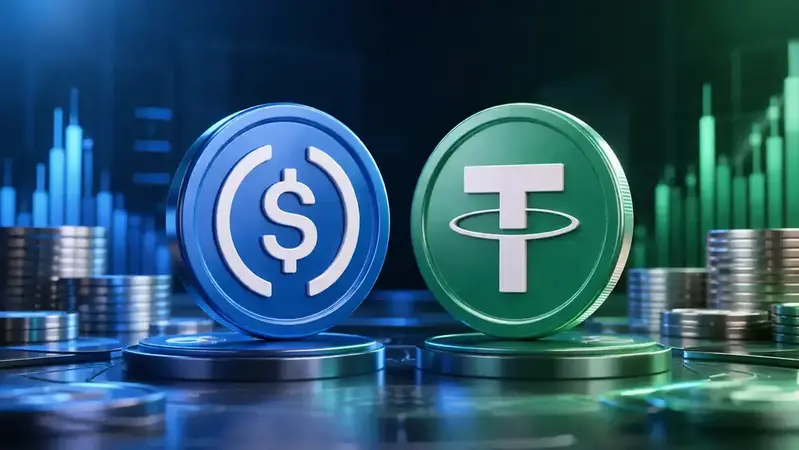
How to Earn Interest on USDT in 2026: Staking, Lending, and Stablecoin Yield Explained
To earn interest on USDT in 2026, you move your tokens into a product that pays a yield, which in practice means lending them out, holding them in a rewarded wallet balance, or supplying them to a decentralised lending market. USDT itself cannot be staked the way a proof-of-stake coin can, because it runs on the TRON, Ethereum, Solana and BNB Chain networks rather than securing a chain of its own. The yield you see, usually quoted as an annual percentage, comes from borrowers paying to use your dollars. Rates move with demand, and higher advertised rates almost always mean higher counterparty or smart contract risk, so check who is holding the funds before you chase a headline number.
What USDT Actually Is
Tether (USDT) is a stablecoin designed to hold a value of one US dollar per token. It is the largest stablecoin by market capitalisation, a position tracked continuously by CoinMarketCap, and its issuer, Tether, publishes reserve reports that describe what backs the tokens in circulation. Because the price is meant to stay near a dollar, holding USDT feels like holding dollars in a digital form, and that stability is exactly what makes it useful for payments between countries.
That same stability is also why USDT cannot be staked in the strict sense. Staking usually means locking a token to help secure a blockchain and earning rewards for doing so, which applies to coins such as ETH, SOL or DOT. USDT is a token that lives on top of those networks, so when people say they are staking USDT, they usually mean they are lending it, supplying it to a liquidity pool, or holding it in some other yield-bearing arrangement. The distinction matters because the source of the return is different, and so is the risk.
Where Stablecoin Yield Actually Comes From
Interest on USDT does not appear from nowhere. It comes from three main sources.
Borrower demand. Traders and businesses borrow stablecoins to take positions, settle trades, or bridge short term cash needs. They pay interest for that access, and part of it is passed to the lender.
Market making and liquidity provision. Trading venues need stablecoin liquidity to quote prices on both sides of a market. Supplying dollars to those pools earns a share of the fees the market generates.
Platform incentives. Exchanges and wallets sometimes top up the rate with their own funds to attract deposits. This is a marketing cost for the platform, and it is usually temporary.
Understanding the source tells you how durable the rate is. A yield driven by real borrower demand tends to persist, while a yield propped up by a promotional subsidy tends to fall when the promotion ends.
The Main Ways to Earn on USDT
There is no single best product, because each one trades a different amount of convenience against a different type of risk. Binance Academy is a useful free reference for how these products work before you commit any funds, and the same structures appear on most large platforms.
| Method | How it works | Typical access | Main risk |
|---|---|---|---|
| Flexible lending on an exchange | You deposit USDT and can withdraw any time | Very easy, often one tap | Platform and counterparty risk |
| Fixed term lending | You lock USDT for a set period for a higher rate | Easy, funds locked | Platform risk plus lock up |
| Rewarded wallet balance | Your wallet balance earns a variable rate | Easiest of all | Platform risk |
| DeFi lending pools | You supply to a smart contract market | Medium, needs a wallet | Smart contract risk |
| Liquidity provision | You supply pairs to a market | Advanced | Impermanent loss and contract risk |
On the largest exchanges, flexible stablecoin products have historically offered rates that adjust with market demand, often in the low single digits, while promotional and fixed term products have advertised considerably more. The exact number changes constantly, so the honest answer is that any rate you see today is a snapshot, not a promise. Treat a rate far above the market as a question, not an opportunity.
Staking, Lending and Yield Farming Compared
The three terms get used interchangeably, which causes confusion.
Lending means you give someone else the right to use your dollars for a period and they pay you interest. The risk is that the borrower or the platform fails to return the funds.
Staking applies to proof-of-stake networks. If you hold ETH or SOL, you can stake it, and the reward comes from the network's inflation and fees. You cannot stake USDT itself, but you can move USDT into a network ecosystem that pays rewards for other activities.
Yield farming is the practice of moving funds between different pools to chase the best return. It can produce the highest headline numbers and it also carries the most complexity, because each new pool introduces a new contract, a new token and a new set of risks.
For most people holding USDT, lending through a reputable platform is the simplest entry point, and the advanced strategies only make sense once you understand what each one exposes you to.
How DapsyPay Fits Into a Stablecoin Balance
Earning a yield assumes you are holding USDT in the first place, and most people end up holding it because they use it for something practical. DapsyPay is the crypto payments platform built for people who buy, hold and send stablecoins across borders. You can hold dollars in USDT and use them to pay a supplier, a landlord or a service abroad, with the rate and the cost shown before you confirm, and settlement that completes super fast through blockchain rails rather than waiting on a correspondent bank chain.
That makes the practical question less about chasing the highest yield and more about how long your dollars sit idle. If you buy USDT to pay an overseas supplier in two weeks, the money is parked anyway, and a low risk rewarded balance or short lending position can earn something while it waits. What you should not do is lock funds for a long term at a rate that looks attractive and then discover you need the money before the term ends, or accept an unusually high rate from a platform you have not checked. Yield is a secondary benefit of holding stablecoins, not the reason to take on unnecessary risk.
The Risks You Must Check Before Chasing a Rate
This is the part that separates a sensible yield strategy from an expensive lesson.
- Counterparty risk. If you lend through a platform, your protection depends on that platform and its borrowers. A rate that is far above the market is usually compensation for a risk you have not priced.
- Smart contract risk. DeFi pools are code. Bugs, exploits and admin key compromises have caused real losses, and no interest rate compensates for a total loss of principal.
- Lock up risk. Funds committed to a fixed term cannot be withdrawn early in most cases, which matters if you use USDT for real payments.
- Stablecoin risk. A stablecoin is designed to hold a dollar peg, but that depends on the issuer's reserves. Read the reserve reports rather than assuming.
- Regulatory and tax risk. Rules for crypto, and the tax treatment of earnings, vary by country and are still developing. Nigeria has taken active steps to bring digital assets into its regulatory framework, so keep records of what you earn.
- Withdrawal and network risk. USDT moves on several networks, and a withdrawal sent on the wrong network can be difficult or impossible to recover. Confirm the network before every transfer, because a withdrawal sent on the wrong chain can be difficult or impossible to recover.
Practical Steps to Start Earning on USDT
- Decide how much of your USDT you can genuinely leave untouched, and keep a working balance you can spend.
- Choose a product whose risk you understand, starting with a simple, flexible lending product rather than an exotic pool.
- Check the platform's reserve, audit, insurance and withdrawal record before depositing anything.
- Compare the rate to the market rather than to the biggest number you can find.
- Move a small test amount first, confirm that deposits and withdrawals work, then scale.
- Track the earnings for your records, including dates, amounts and the platform used.
- Review monthly, because rates move and a product that was competitive last quarter may not be now.
Common Mistakes to Avoid
- Chasing the highest advertised rate without asking where the yield comes from
- Locking funds for a long term when the same dollars are needed to pay a supplier
- Assuming staking and lending are the same thing, when the risks are different
- Ignoring network selection on deposits and withdrawals, which is the most common cause of lost USDT
- Skipping records, then struggling to account for the earnings later
- Depositing a large balance into a platform you have never tested with a small withdrawal
Frequently Asked Questions
Conclusion
Earning interest on USDT is a straightforward idea wrapped in a lot of noise. Your dollars earn a return because someone is paying to borrow them, and the size of that return tells you something about the risk behind it. Choose simple products first, check who is holding the funds, keep enough liquidity to make real payments, and treat a very high rate as a warning rather than a win. Between payments, a stablecoin balance can still be useful, and the faster it moves when you need it, the less time it spends idle. For the spending side of the equation, our guides to paying UK suppliers from Nigeria, paying rent abroad from Nigeria, paying foreign suppliers with a personal bank account and getting the best exchange rate for international payments show where stablecoin rails fit into a real payment plan.
Put Your Stablecoin Balance to Work
wallet.dapsypay.com lets you buy, hold and send USDT with the rate and cost shown upfront, so your dollars move when you need them.
Visit wallet.dapsypay.com