
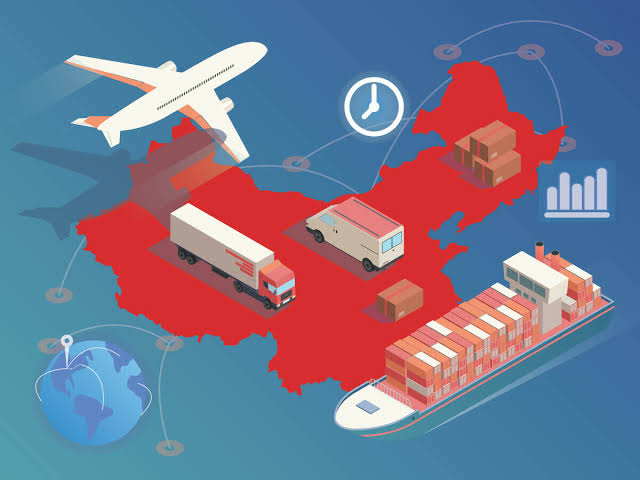
Quick Answer: Importing cosmetics from China means treating them as regulated products, not general cargo. You need a manufacturer with a cosmetics production licence, a documented formula with an ingredient list in INCI format, a safety assessment, GMP certification and a certificate of analysis per batch. Then you need import registration in your own market, correct HS classification under heading 3304, and compliant shipping, since aerosols and alcohol based fragrances are classed as dangerous goods.
Why Cosmetics Are a Different Import Category
Most consumer goods can be imported on a commercial invoice and a packing list. Cosmetics cannot. Almost every market treats them as a regulated product category because they sit against skin, eyes and mucous membranes, and because a defective batch can injure people at scale.
That changes the import process in four ways. The manufacturer must hold a cosmetics production licence, not a general trading licence. The formula must be documented and assessable. The product must be registered or notified in the destination market before sale. And the shipment must comply with transport rules for flammable and pressurised products.
Businesses that skip these steps usually discover the problem at customs, at the marketplace listing stage, or after the first customer complaint. None of those is a cheap place to find out.
The Chinese domestic market adds its own layer. Cosmetics sold inside China are regulated by the National Medical Products Administration, with a filing or registration requirement depending on the product type. That system is a useful signal: a factory that can navigate it is usually a factory that keeps real records.
The Decisions You Make Before Contacting a Factory
Four decisions determine everything that follows.
1. Product category and HS classification
Most skincare, makeup and haircare products fall under HS heading 3304. Shampoos, hair sprays and hair preparations sit in 3305, oral and dental preparations in 3306, and shaving and personal deodorant products in 3307. Soaps are classified separately, usually under 3401.
The heading determines the duty rate, the licensing requirements and sometimes the shipping restrictions. Get a binding ruling from your customs authority if the product sits near a boundary, for example a tinted moisturiser with sunscreen, which may be classified as a cosmetic or as a pharmaceutical depending on claims and SPF.
2. Claims and labelling
Every claim you print has regulatory consequences. Words such as treats, heals, cures or repairs move a product toward medicine classification in many markets. Hypoallergenic, dermatologist tested, organic and natural are all regulated or restricted terms in some jurisdictions.
Decide the label before you approve the artwork, because reprinting labels after a shipment lands is one of the most expensive mistakes in this category.
3. Formula ownership
You have two options:
- Stock formula. Cheaper and faster. The factory already produces it, you apply your branding, and minimum order quantities can be low.
- Custom formula. You own the development, pay for samples and stability testing, and commit to higher volumes.
Stock formulas are fine for commodity categories such as basic cleansers, lip balms and body butters. Custom formulas matter when the product is your differentiator.
4. Market registration path
Registration is the long pole. In the European Union, a responsible person established in the EU must notify the product on the CPNP database before placing it on the market, backed by a cosmetic product safety report. In the United States, the FDA cosmetics framework now includes facility registration and product listing under the Modernization of Cosmetics Regulation Act. In Nigeria, cosmetics require NAFDAC registration. In the Gulf, each emirate or country has its own notification route.
Start the registration file while you are still sampling. It runs in parallel with production, not after it.
Finding and Vetting a Chinese Cosmetics Manufacturer
China's cosmetics manufacturing clusters sit mainly in Guangdong, particularly Guangzhou and Shenzhen, with a second cluster around Shanghai and Zhejiang. Proximity to a cluster is not evidence of quality, but it does explain why quotations vary so widely.
A credible manufacturer will be able to show:
- A cosmetics production licence issued by the provincial medical products authority
- ISO 22716 good manufacturing practice certification, the international GMP standard for cosmetics
- NMPA filing or registration records for products it already sells
- A quality manual and batch record system
- Certificates of analysis for recent batches
- References from export customers, ideally in your target market
Verify rather than accept. Ask for the licence number and check it. Ask for the GMP certificate and confirm the issuing body. Ask for a live video walkthrough of the production line and the filling area, not a marketing video.
Red flags include a trading company presenting itself as a manufacturer, refusal to provide a formula breakdown, willingness to print any claim you like without documentation, and pressure to pay a large deposit to a personal account.
The Document Pack You Need
Before goods ship, assemble the following. Missing documents cause more clearance delays than any other single issue.
| Document | Purpose |
|---|---|
| Commercial invoice | Declared value and terms of sale |
| Packing list | Carton count, weights, dimensions |
| Certificate of analysis | Batch specific test results |
| Safety assessment or CPSR | Formula safety documentation |
| GMP certificate | Manufacturing standards evidence |
| Free sale certificate | Proof the product is sold legally at origin |
| Ingredient list in INCI format | Regulatory and labelling requirement |
| Material safety data sheet | Required for hazardous or flammable products |
| Certificate of origin | Duty treatment and preferential rates |
| Import registration or notification | Market access approval |
Keep the product name, variant, batch number and value identical across every document. Customs systems match them, and a mismatch flags the file.
Shipping Cosmetics From China
Cosmetics are not all the same cargo. Three categories behave differently.
General cosmetics. Creams, serums, powders and non flammable liquids move as standard cargo. Sea freight is economical for pallet volumes, air freight for samples and urgent launches.
Alcohol based products. Perfumes, setting sprays and many toners contain flammable ethanol and are classified as dangerous goods for transport. They require UN compliant packaging, marking and documentation, and many airlines restrict them.
Aerosols. Deodorant sprays, dry shampoos and foam products are pressurised and classified as dangerous goods. Volume limits apply per package, and sea freight is often the only practical option for larger quantities.
Temperature is the fourth variable. Some emulsions and natural products degrade in heat, and a container sitting on a dock in July can ruin a batch. Ask the factory for a stability profile and consider a reefer container for sensitive lines.
Finally, check the shelf life remaining at arrival. A product with a 24 month shelf life that spends four months in transit and three months in a warehouse has less room to sell than the label suggests.
The Landed Cost Stack
Price per unit is the least useful number in this business. Build the full stack.
| Cost line | Illustrative amount on a 20,000 dollar order |
|---|---|
| Goods at factory gate | 20,000 dollars |
| Inland haulage to port | 300 dollars |
| Ocean freight | 1,800 dollars |
| Insurance | 120 dollars |
| Duty at 20 percent of CIF | 4,440 dollars |
| VAT or sales tax at 20 percent | 5,328 dollars, often recoverable |
| Clearing and agent fees | 400 dollars |
| Port and terminal charges | 350 dollars |
| Last mile delivery | 300 dollars |
| Payment and FX cost | 80 to 200 dollars |
The duty and tax lines alone can exceed the freight cost, which is why classification and valuation matter more than freight negotiation. Use illustrative rates only as a template, then replace them with the actual tariff for your market and product.
Paying the Factory Without Delays
Chinese cosmetics factories typically work on a 30 percent deposit and 70 percent balance before shipment, with the balance released after inspection. Some will accept a letter of credit for large orders, and a few will work on trade assurance terms through a platform.
The payment leg is where launch dates are won or lost. A deposit that arrives late moves you out of the production queue. A balance that arrives short, because an intermediary bank deducted fees or the exchange rate was applied with a margin, triggers a revised invoice and a hold on the booking.
DapsyPay runs on conventional international rails such as SEPA and ACH. Payments are super fast compared with a correspondent banking chain, there are no limits on the amount, and bulk sending is built in, which helps when you are paying a deposit, a mould fee and a label printer in the same week. The fee is transparent and the amount quoted is the amount the factory receives, so the balance on the proforma invoice clears first time.
For importers funding a large order, our guide to purchase order financing explains how to bridge the gap between a confirmed order and the supplier payment. If you are also paying for a clinic or a course abroad, the same shortfall logic applies, as covered in our notes on paying a Turkish clinic.
Quality Control Before the Balance Payment
Never release a balance on photographs alone. A standard sequence:
- Pre-production sample. Approve the formula, texture, fragrance and packaging before the run starts.
- In-line inspection. A third party inspector checks filling weights, labelling and batch coding during production.
- Pre-shipment inspection. Sample cartons are opened, units are checked against the approved sample, and quantities are verified.
- Lab testing. Independent testing for microbial limits, heavy metals and preservative efficacy on the first order and periodically after.
- Balance payment. Released only after the inspection report is clean.
Third party inspection for a cosmetics shipment typically costs a few hundred dollars and is the cheapest insurance in the process.
Common Mistakes
- Buying from a trading company that cannot produce a manufacturing licence.
- Skipping the safety assessment and discovering the gap at registration.
- Approving artwork that makes medicinal claims.
- Forgetting that perfumes and aerosols are dangerous goods.
- Underestimating duty and tax when pricing the product.
- Paying a deposit to a personal account rather than a company account matching the contract.
- Ordering packaging and product separately without checking compatibility and fill line.
- Ignoring shelf life consumed in transit.
Frequently Asked Questions
Conclusion
Importing cosmetics from China is a compliance project with a logistics component attached. The factories are capable and the pricing is competitive, but the product only becomes sellable when the licence, formula, safety file, labelling and market registration all line up.
Start with the classification and the registration path, vet the manufacturer properly, keep the document pack identical across every file, price the landed cost rather than the unit cost, and pay on a route that delivers the exact amount the factory expects. Do those things and the import becomes a repeatable process rather than a series of surprises.
Our guide to why banks quote different exchange rates explains how to read the currency cost inside that stack, and our piece on purchase order financing covers how to fund the deposit when cash flow is tight.
Pay Your Manufacturer in Full, First Time
Transparent fees, no limits and direct bank delivery for deposits and balance payments.
Visit dapsypay.com