
Quick Answer
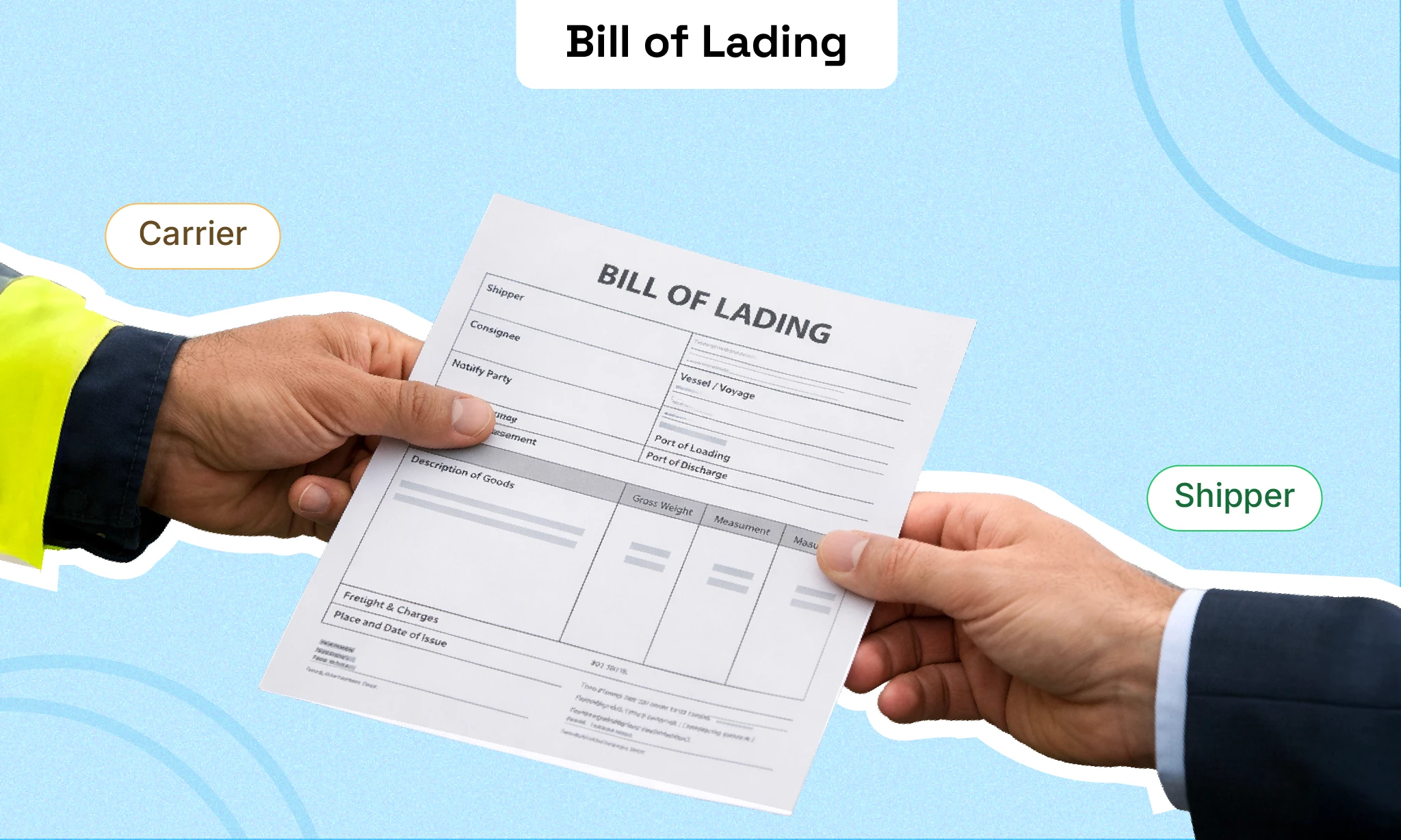
A bill of lading is the document a carrier issues when it takes charge of your goods for shipment. It does three jobs at once: it is a receipt for the cargo, a contract of carriage between you and the carrier, and, in its negotiable form, a document of title that controls who can claim the goods. For importers, the bill of lading matters because the wrong name, the wrong quantity, or the wrong release instruction can stop your cargo from being collected even after the goods have arrived and the freight has been paid.
The Document That Controls Your Cargo
Most importers spend weeks on supplier prices, shipping quotes, and duty estimates, then treat the paperwork as an afterthought. That is a costly habit, because one shipping document sits at the centre of the whole transaction. It is the bill of lading, usually shortened to B/L.
The bill of lading is issued by the carrier, the shipping line or airline that physically moves the goods. It travels with the shipment and it records the essential facts: who shipped the goods, who should receive them, what is inside, how many packages or how much weight, where the journey started, and where it ends. It looks like a form. It behaves like a key.
That is because, in its negotiable form, the bill of lading is a document of title. Whoever holds the original endorsed copy can claim the goods. The carrier will release the cargo to the holder of that document, not simply to whoever turns up at the port and asks. This single feature is what makes international trade possible between parties who have never met, because it ties control of the goods to control of a document that can be bought, sold, or pledged.
If you want an authoritative walk through how these documents are used in practice, the International Chamber of Commerce publishes standards on trade terms and documents that underpin most global contracts. It is worth reading how deliberately the system is designed, because it explains why an importer cannot simply wave a payment receipt and collect a container.
The Three Jobs a Bill of Lading Performs
Understanding the three functions makes the document far easier to manage.
- A receipt for the goods. The carrier confirms what it received and in what apparent condition. If the document notes damage or a short count, that note follows the cargo and can complicate a claim later.
- A contract of carriage. It sets out the terms of the journey, including who pays freight and where responsibility sits along the route.
- A document of title. In negotiable form it represents ownership. Handing over the endorsed original transfers the right to collect the goods.
When all three line up, the shipment flows. When one of them is wrong, the cargo can sit at the port while the parties argue about paperwork.
The Main Types of Bill of Lading
Different shipments need different documents, and using the wrong type creates avoidable friction.
| Type | What it does | When it is used |
|---|---|---|
| Original bill of lading | A negotiable document of title issued in a set of originals | When the buyer must hold title, common with letters of credit |
| Telex release | The carrier releases cargo without the original document after surrender | When the original would arrive too late and speed matters |
| Sea waybill | A non negotiable receipt naming a consignee | When no title transfer is needed and the parties trust each other |
| Air waybill | The air cargo equivalent, non negotiable | Air freight, where speed replaces the need for title control |
The choice has real consequences. An original bill of lading gives the buyer strong protection because the goods cannot be released without the document. It also slows things down, because the originals must physically reach the buyer and be presented before collection. A telex release speeds collection but removes that protection. A sea waybill is the simplest option, but only safe when the relationship is strong enough that nobody needs the document to control the cargo.
This is the trade off importers wrestle with on every shipment: speed at the port against security over the goods.
Why the Bill of Lading and Your Payment Are Linked
The bill of lading sits exactly where money and goods meet, which is why it belongs in any conversation about how importers pay suppliers.
Many supplier contracts release the balance payment against shipping documents, and the bill of lading is the document that matters most. The supplier ships, presents the bill of lading and the invoice, and the buyer releases the balance. Under a letter of credit, the bank examines the documents and pays only if they match the terms exactly. A single mismatch between the bill of lading and the credit can delay payment and, with it, the cargo.
The practical lesson is that the payment and the paperwork have to be prepared together, not one after the other. If the money is ready but the document is not, the container waits. If the document is ready but the money is late, the container also waits, and storage charges begin to build. Either failure turns a clean import into an expensive one.
For a closer look at where documents and duty assessments meet the payment itself, our guide on how global payout networks move money into emerging markets follows the money after it leaves your account. If your business funds supplier balances while waiting on buyers, the explainer on whether invoice financing is a loan or a sale of receivables covers the cash flow side. Behind every payment sits a banking layer most importers never see, and the piece on what banking as a service is and how it powers cross-border payments unpacks it. And for a route outside the conventional system, our comparison of two widely used digital payment options looks at how value moves on another kind of network.
Maersk explains how it issues and handles bills of lading as a carrier, and DHL documents how customs and shipping paperwork must align for a shipment to clear. Both confirm the same reality: the document is not administration, it is control. A carrier can only move as fast as the payment that releases the cargo, which is why a rail built for business matters as much as the paperwork itself.
How to Check a Bill of Lading Before You Pay
A short review before funds leave prevents most document disputes.
- Match the names exactly. The shipper, consignee, and notify party must match the contract and, where relevant, the letter of credit, character for character.
- Check the quantity and description. The number of packages, weights, and the goods description should mirror the invoice and packing list.
- Confirm the freight terms. Who pays freight, and at which point, should match the sale terms you agreed.
- Decide the release method early. Original, telex release, or sea waybill should be chosen before shipping, not after the vessel sails.
- Keep every copy traceable. Originals are valuable. Know where each one is at all times.
- Send the balance payment on a rail that reaches the destination account fast. A supplier will not release documents against a payment that has not arrived.
This is where the payment rail becomes part of document logistics. DapsyPay runs on conventional transfer rails such as SEPA and ACH, moves business payments fast with no limits, and pays straight into the destination bank account with transparent pricing and no hidden exchange rate markup. For importers who release balance payments against documents, that means the supplier can confirm receipt sooner and hand over the bill of lading without the payment becoming the bottleneck.
Common Mistakes That Hold Up Cargo
- Spelling errors in names. Even a small mismatch can force an amendment and delay release.
- Choosing an original bill of lading and then losing time in courier transit. The document must arrive before the vessel does.
- Assuming a telex release is automatic. It must be arranged and paid for through the carrier.
- Ignoring the condition note. A claused document recording damage weakens any later claim.
- Letting the bank and the carrier see different versions. Documents that disagree stop a letter of credit cold.
- Paying the balance on a slow rail. The documents wait until the money lands, and storage waits with them.
FAQ
Conclusion
The bill of lading is the quiet hinge of international trade. It records the shipment, sets the terms of carriage, and, in its negotiable form, decides who can claim the goods. Treat it as a payment document, not paperwork. Get the names, quantities, terms, and release method right before the goods move, keep the money on a rail that reaches the destination account fast, and your cargo will spend its time on the road instead of earning storage charges at the port. Do these two things well, and one of the most stressful parts of importing becomes routine.
Simplify Your International Business Payments
Fast, transparent, and reliable cross-border payments built for bulk and business sending.
Visit dapsypay.com