
Quick Answer
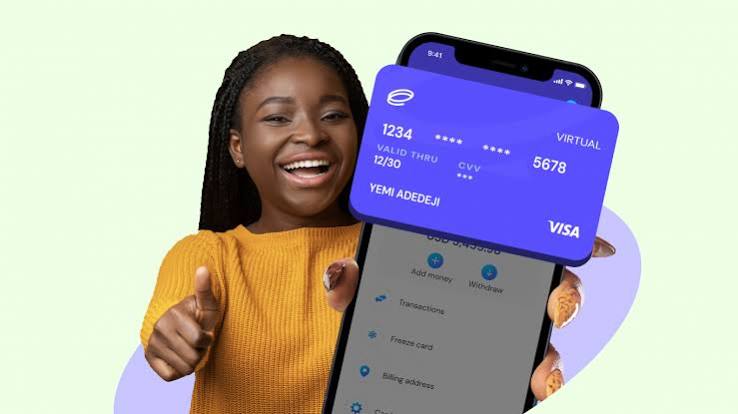
A virtual dollar card is a digital card, issued by a bank or fintech, that holds or draws on a dollar balance and can be used for online payments in foreign currency. There is no plastic. The card number is generated in an app and works wherever the card network is accepted online. It suits subscriptions, ads, and travel bookings, but it carries funding fees, exchange rate margins, spending caps, and merchant restrictions, and it cannot settle a large supplier invoice.
What a Virtual Dollar Card Actually Is
The word virtual describes the form, not the function. Underneath, a virtual dollar card is an ordinary card issued on a major network, with a sixteen digit number, an expiry date, and a security code. What makes it different is that it exists only in an app, and it is denominated in a currency that is not necessarily your local one.
That combination solves a specific problem. A business or individual in a market with exchange controls needs to pay a foreign merchant that only accepts cards and only bills in dollars. A local currency card may be blocked, may carry a punitive conversion rate, or may not be accepted at all. A dollar denominated card sits in between.
The card network matters more than most people realise. A card issued on the Visa or Mastercard network is accepted at any merchant that takes that network, which is most of the global internet. A card issued on a smaller domestic scheme is not, regardless of how good the app looks.
How a Virtual Card Works
The flow has four stages, and each one is a place where money or time can be lost.
1. Funding
You move money from a bank account into the card balance. Some providers hold the balance in dollars, some convert at funding time, and some convert at the moment of each transaction. The difference changes your total cost significantly on repeated small purchases.
2. Authorisation
When you pay a merchant, the merchant sends an authorisation request through the card network to the issuer. The issuer checks the balance, the limits, the merchant category, and any fraud rules, then approves or declines. This takes a moment, and the merchant usually sees only a generic result.
3. Settlement
The approved transaction settles in the merchant's currency. If the card is dollar denominated and the merchant bills in another currency, the network converts, and the network rate includes a margin.
4. Reconciliation
The transaction appears in the app, sometimes with a pending amount that differs from the final amount because of currency movement between authorisation and settlement.
Most disputes about virtual cards come from stage four, when a business expects one number and sees another.
Who Uses Them
Virtual dollar cards have a clear set of legitimate uses.
- Software subscriptions. Monthly charges in dollars from vendors that accept cards only.
- Advertising accounts. Ad platforms bill in dollars and often require a card on file.
- Travel bookings. Airlines, hotels, and booking platforms that price in foreign currency.
- Online retail. Merchants abroad that do not accept local cards.
- Budget control. A card funded for one purpose, with a cap, limits exposure if the number is compromised.
They are less useful for anything that looks like a business payment: supplier invoices, deposits, contract balances, and anything that requires a payment reference the supplier can match to an order.
What It Really Costs
The headline fee is rarely the whole cost. Four layers usually apply.
| Cost layer | How it appears |
|---|---|
| Funding fee | A percentage charged when you load the card |
| Exchange rate margin | Built into the rate used at funding or at each transaction |
| Transaction fee | A small fixed or percentage charge per purchase |
| Decline or inactivity fee | Charged by some providers when a payment fails or the card is idle |
Then there are the costs that do not appear on any schedule. A card funded at a poor rate loses value silently. A decline at a critical moment costs a booking or an ad account suspension. A provider that requires a minimum balance ties up cash you could have used for stock.
The way to compare two cards is not the fee page. It is the amount a merchant receives for a fixed local currency outlay. Fund the same amount on two cards, make the same purchase, and compare what actually left your account.
Limits That Catch People Out
Virtual cards carry several limits that are rarely explained clearly at sign up.
- Per transaction caps. Often set low by default and raised only after verification.
- Monthly or daily caps. A cap that is fine for subscriptions can block a flight booking.
- Merchant category blocks. Some issuers block gambling, money transfer, and certain high risk digital categories.
- Geographic rules. A card issued in one country may be declined at merchants in another.
- Authentication requirements. A payment that needs a code sent to a phone number you no longer control will fail.
- Balance holds. Hotels and car hire place a hold above the actual charge, which can exceed your balance.
The pattern is consistent: a card that works perfectly for a twenty dollar subscription can fail on a two thousand dollar booking without any change in your account standing.
Where a Card Is the Wrong Tool
Cards are designed for consumer style, merchant initiated payments. They are a poor fit for business payments, for four structural reasons.
- No payment reference. A supplier invoice needs a reference that reconciles to an order. A card transaction gives you a merchant descriptor and a date.
- Low ceilings. Card limits are set for retail risk, not for contract values.
- Chargeback instead of trace. If something goes wrong, the remedy is a dispute process rather than a trace on a payment that can be followed through the banking system.
- Recipient restrictions. Suppliers that invoice by bank transfer usually do not accept card payments at all, and adding a card acceptance fee to a large invoice is expensive for both sides.
A business that tries to run supplier payments on virtual cards usually ends up with a mix of split payments, declined transactions, and a reconciliation problem at month end.
Card Versus Bank Transfer
| Requirement | Virtual dollar card | Bank transfer on conventional rails |
|---|---|---|
| Small online subscription | Works well | Possible but disproportionate |
| Supplier invoice with reference | Poor fit | Designed for this |
| Large contract payment | Blocked by limits | No limits |
| Speed of setup | Minutes | Requires beneficiary details |
| Cost visibility | Funding fee plus margin | Quoted fee and rate before sending |
| Traceability | Dispute process | Traceable through the banking chain |
| Bulk payments | One card per payment | Batch in a single instruction |
The right answer is usually both tools, used for what each was built for: a card for the subscriptions, a transfer for the invoices.
How to Choose a Card Provider
Check these before funding anything.
- Which network the card runs on, and whether your main merchants accept it
- Whether the balance is held in dollars or converted per transaction
- The all in cost on a test purchase, not the published fee
- Default limits and how to raise them
- Which merchant categories are blocked
- How declines are handled, and whether declined transactions are charged
- How long refunds take to return to the card
- What identification and source of funds documents are required
That last point matters more than it used to. Regulated issuers must verify customers and understand where the funding comes from, which is why a card application now often asks for identification, proof of address, and sometimes payslips or business records. The Central Bank of Nigeria publishes the foreign exchange framework that shapes how dollar cards are funded and spent in that market, and providers apply it differently.
When the Payment Is an Invoice, Not a Purchase
For a business paying overseas suppliers, the tool that matters is the one that moves the invoice amount, in full, with a reference the supplier recognises.
DapsyPay is built for that leg. Payments run on standard international rails such as SEPA and ACH rather than on card networks, so there is no merchant category to be blocked and no per transaction ceiling to hit. The platform supports bulk sending, which means a month of supplier invoices can be released in one instruction, and fees plus the conversion rate are shown before you confirm so the amount landing in the supplier's account is known in advance. Funds are delivered directly to the supplier's bank account, with a reference that matches the invoice.
That is the practical division of labour. Keep a card for the tools your team subscribes to. Use a transfer platform for the money that has to arrive in full, on a date, with a record. Businesses that get this wrong spend their month end reconciling card statements instead of closing the books, and our guide to keeping supplier payments running during an account review covers what happens when the card route is the only route available.
Common Mistakes
- Funding a card at a poor rate and blaming the merchant for the price
- Assuming a dollar card is a dollar account, when the balance may not be withdrawable
- Running supplier invoices through a card and losing the reference
- Leaving a card funded for a subscription that was cancelled months ago
- Using one card for personal and business spending and losing the audit trail
- Ignoring the pending amount and reconciling on the authorised figure
- Forgetting that a card expiry breaks every subscription attached to it
FAQ
Conclusion
A virtual dollar card is a useful, narrow tool. It solves the problem of paying a foreign merchant that only accepts cards and only bills in dollars, and it does that well when the limits and the fees are understood.
It does not solve the problem of paying a supplier. That needs a rail with no ceiling, a reference, and a record, which is a different product with a different cost structure. Knowing which problem you are solving is most of the battle.
Related Guides
- How to Keep Paying Suppliers While Your Account Is Under Review
- How to Pay for ChatGPT Plus
- What Is a Standby Letter of Credit
- What to Do When a Payment Reference Is Missing
Pay the Invoice, Not the Card Fee
Bulk supplier payments on conventional rails, no limits, and the rate shown before you confirm.
Visit dapsypay.com