
Quick Answer
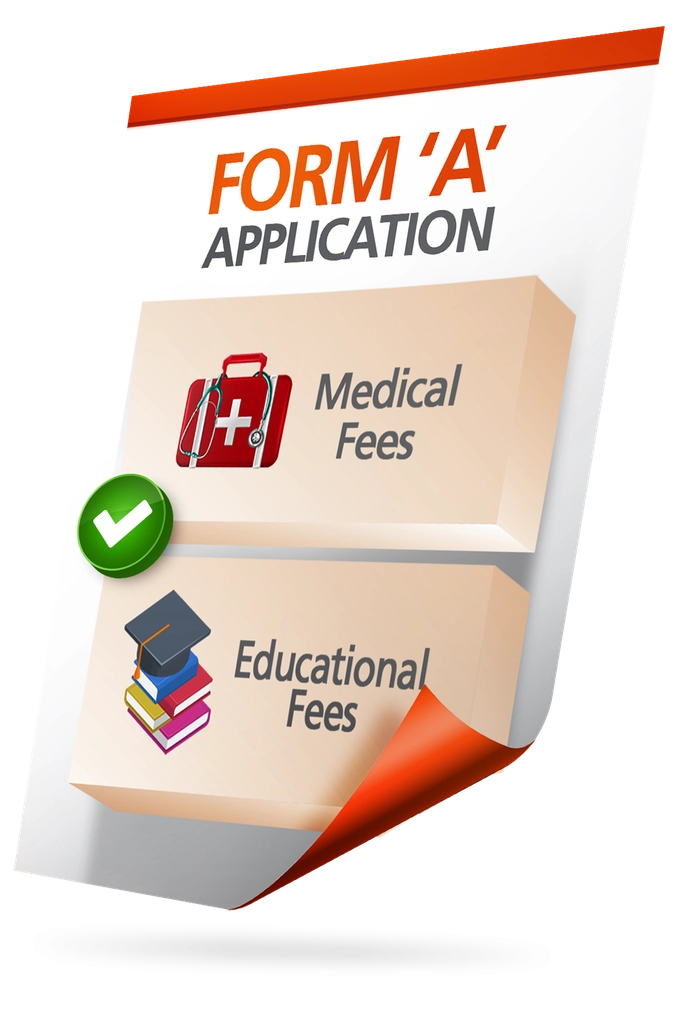
CBN Form A is the application form used in Nigeria to obtain foreign exchange for payments that are not imports of goods. It covers service payments, tuition and school fees, medical bills, subscriptions, professional fees, and travel allowances. The form is submitted through an authorised dealer bank, and it registers the transaction so the bank can verify the purpose and sell the currency. Form A is different from Form M, which is used for visible trade, meaning goods imported into the country.
Form A in Plain English
Nigeria operates a monitored foreign exchange system. Before a bank sells dollars, pounds, or euros for an international payment, it needs to know what the payment is for, who is receiving it, and whether the transaction is legitimate. Form A is the standard document that answers those questions for what regulators call invisible transactions.
An invisible transaction is simply a payment that is not payment for imported goods. A university fee is invisible trade. A hospital deposit for treatment abroad is invisible trade. Software subscriptions, legal fees, conference fees, and family support payments also sit in that group. Imports of physical goods are visible trade and follow a different document, Form M.
The practical consequence is straightforward. If your payment does not involve goods crossing a border, the bank will normally ask for Form A. If it does involve goods, expect Form M and the customs documentation that goes with it.
Which Payments Require Form A
The list is longer than most people expect. Form A is commonly required for the following categories.
- Education. Tuition fees, accommodation paid to a university, application and examination fees, and living cost transfers for students abroad.
- Medical. Hospital deposits, surgery fees, consultation invoices, and treatment packages billed by a foreign hospital.
- Professional and business services. Consulting fees, legal fees, audit fees, software and cloud subscriptions, advertising services, and platform fees paid to overseas providers.
- Subscriptions and memberships. Professional body fees, journal access, online tools, and conference registrations.
- Travel related transfers. Allowances for personal and business travel, including the documentation banks require for those requests.
- Family and other personal transfers that fall outside trade, subject to the limits and rules in force at the time.
The Central Bank of Nigeria publishes the circulars that set these requirements, and the rules are updated from time to time. Because eligibility, limits, and documentation lists change, always confirm the current position with your bank before you start an application. A form completed against an outdated checklist is one of the most common causes of delay.
Who Is Involved in the Process
Four parties sit around a Form A transaction, and each one has a job.
- The applicant. The person or business paying for the service, who completes and signs the form.
- The authorised dealer bank. The Nigerian bank that receives the application, checks the documents, registers the transaction, and sells the foreign currency where applicable.
- The beneficiary. The overseas university, hospital, supplier, or service provider receiving the payment.
- The regulators and systems behind the bank. Form A registrations are recorded in the central monitoring system the banks use, which is what allows a payment to be traced and reported.
Understanding this chain explains why the same request can be fast at one bank and slow at another. The bank is not just moving money, it is also validating documents against a rulebook and registering the transaction before it releases currency.
What Form A Actually Captures
The form collects the details a bank needs to classify and monitor the payment. In practice it covers the following fields.
- Applicant name, address, and account details
- Beneficiary name, address, and bank details, including country
- Amount and currency
- Purpose of payment, described specifically rather than generally
- The supporting invoice or proforma invoice reference
- Expected date of payment
- Documents attached, itemised by type
The purpose field deserves attention. "Payment for services" is a weak description. "Tuition fee for MSc Data Science, second semester, University of Manchester, invoice number 44821" is a description that a reviewer can approve without a follow up question.
How the Process Works Step by Step
1. Gather the documents before approaching the bank: invoice or proforma, admission or appointment letter where relevant, and any contract or agreement.
2. Obtain the Form A from your bank, or complete the electronic version if the bank offers one.
3. Fill in the form with details that match the invoice exactly, including spellings and account numbers.
4. Submit the completed form with the supporting documents and your identification.
5. Allow the bank to verify the documents and register the transaction in the monitoring system.
6. Complete the funding side, whether that means buying foreign currency at the applicable rate or funding from your domiciliary account.
7. Receive the payment confirmation and keep the registered form, which you may need for future applications or audits.
If your request is time sensitive, ask the branch officer at submission which desk handles verification and how long that stage usually takes at that branch. Branch level answers are more useful than general assumptions.
What Slows an Application Down
Delay is rarely a single dramatic failure. It is usually one of these small problems.
- Names that do not match. The applicant name, account name, and invoice name must align. Trading names and abbreviations break that alignment.
- Undocumented purpose. A payment whose purpose cannot be verified from the attached paperwork will sit in a queue.
- Missing admission, appointment, or contract letters for transactions where they are required.
- Currency mismatches. Paying a euro invoice from a dollar funded request creates avoidable conversions and questions.
- An incomplete form. One blank mandatory field can send an application back and return it to the bottom of the pile.
- Timing. Requests submitted in the middle of a policy change, or during the rush before an academic term, move more slowly.
A simple discipline helps. Copy the invoice data into the form rather than retyping it, and check the beneficiary account number digit by digit. A single wrong digit is the difference between a payment that clears and one that bounces back after a week.
Form A for School Fees and Medical Payments
These two categories produce the most questions, so they are worth separate attention.
For education payments, the usual document set is an admission letter or student identification, a fee invoice or statement from the university, and sometimes a breakdown showing which semester the payment covers. Some institutions issue a payment portal reference, and including it speeds up verification because the bank can match your transfer to the institution's record.
For medical payments, hospitals abroad usually issue a formal invoice or a cost estimate with a case reference number. Include it. If a deposit is required to secure a date, ask the hospital for a written statement confirming the deposit amount and what it covers, because a large unexplained transfer to a foreign hospital account invites questions.
Both categories sit outside trade, so both normally travel through Form A rather than Form M. If you are unsure which applies, describe the payment to your bank exactly as it appears on the invoice and let them classify it.
Where a Modern Payment Platform Fits
Form A governs how currency is sourced and monitored, but it does not decide how the money travels once it leaves the account. That last stage still depends on the rails the provider uses, and the difference shows up in cost and in time.
Wise is a reasonable option for individuals sending modest amounts, and it publishes its rate clearly. The trade off is that fees rise with the amount, sending caps apply in some corridors, and multiple transfers mean multiple setups. A platform such as DapsyPay is built differently. It runs on established international rails such as SEPA and ACH, moves payments fast with no account limits, sends in bulk so a bursar, business office, or finance team can settle several invoices in one action, and delivers straight to the beneficiary bank account with the exchange rate and full fee visible before you confirm.
For organisations paying several beneficiaries in different countries, that combination removes both the slowest step and the largest hidden cost. For a look at how friction in international payments compares across methods, the World Bank tracks the cost and speed of cross border payments by corridor, and its data shows how much of the total cost hides in exchange rate margins rather than headline fees.
Timing matters as much as cost. When customers pay slowly, a business can find itself with approved overseas invoices and no cash to settle them. Our explainer on how invoice financing works covers the option of releasing cash against invoices you have already issued.
Mistakes That Cost You Weeks
- Starting the process after the deadline instead of two to three weeks before it
- Assuming Form A and Form M are interchangeable
- Submitting a screenshot of an invoice instead of the original document
- Paying in the wrong currency and accepting a second conversion
- Using a personal account for a business payment without explaining why
- Failing to keep the registered form and payment confirmation for your records
- Expecting the receiving institution to chase the process on your behalf
Most of these are avoidable with a checklist and an hour of preparation.
If a payment sent from Nigeria is later flagged for review on the receiving end, the fix is the same in any corridor. Our guide on why freelance payments get held explains the document pack that releases funds quickly. And if you are funding import activity from the same account, our breakdown of how to calculate import duty in Nigeria shows the charges that apply once goods arrive, which is a separate calculation from the Form A process.
Frequently Asked Questions
Conclusion
CBN Form A is the document that lets a Nigerian bank sell foreign currency for a non trade payment and record it properly. It applies to tuition, medical bills, professional services, subscriptions, and travel related transfers, and it is submitted through an authorised dealer bank with documents that match the invoice exactly. Treat it as a documentation exercise rather than a mystery, prepare the file before the deadline, and be precise with names, amounts, and currencies. Then choose a payment route that keeps the money moving after the form is approved, with transparent fees, no limits, bulk sending, and direct delivery to the beneficiary bank account.
Simplify Your International Payments
Fast, transparent, and reliable cross-border payments for businesses of all sizes.
Visit dapsypay.com