
Quick Answer
The Three Words Behind the Acronym
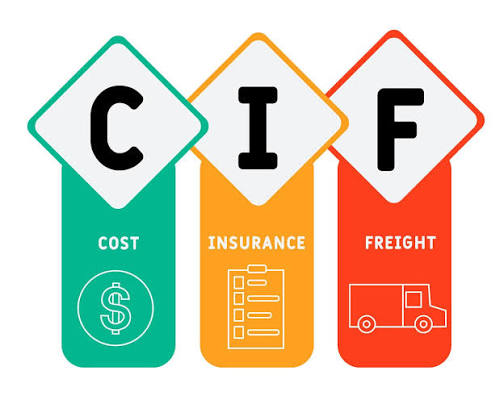
CIF is one of the eleven Incoterms rules published by the International Chamber of Commerce. The letters are a summary of what the seller pays for, not a summary of who carries the risk, and that gap is where most disputes start.
The full term always names a port. CIF Lagos, CIF Rotterdam, CIF Jebel Ali. A CIF term with no port is an incomplete term, and it will be interpreted differently by every party in the chain.
CIF is also restricted to sea and inland waterway transport. If a shipment travels by air, rail or road, CIF is the wrong rule and the contract should use a multimodal term instead. This is one of the most common documentation errors in small importer files: a CIF term on an air waybill.
What CIF Actually Obliges the Seller to Do
Under CIF, the seller carries out a defined set of tasks, and it is worth reading them as a list because each one is a cost line in the price you were quoted.
- Produce the goods and the commercial invoice in line with the contract, plus any conformity documents the contract requires.
- Pack and mark the goods appropriately for the agreed carriage.
- Contract for carriage to the named port of destination and pay the freight. The contract is usually on the carrier's standard terms.
- Obtain export clearance and pay any export duties or formalities in the country of origin.
- Buy cargo insurance that complies with the minimum required by the rule, and hand the policy or certificate to the buyer.
- Deliver the goods on board the vessel at the port of shipment within the agreed window.
- Provide the usual transport document, typically a bill of lading, plus the documents needed for the buyer to take delivery and, where agreed, to transit through a third country.
Two of those deserve a closer look: delivery and insurance.
Delivery happens when the goods are placed on board the vessel at the port of shipment, not when they arrive at the destination port. From that moment, the goods are at the buyer's risk. If the vessel sinks in the Bay of Biscay, the buyer has lost the cargo and the seller has been paid. The buyer's remedy is the insurance policy, which is exactly why the insurance clause exists.
Insurance is where the rule sets a floor rather than a standard. CIF requires cover that at minimum complies with the Institute Cargo Clauses (C), for 110 percent of the contract value, in the contract currency. Clauses C is the narrowest of the three standard sets. It covers total loss and a short list of major casualties, and it does not cover partial damage from handling, water ingress or theft in the way that Clauses A does.
A buyer who assumes "CIF means insured" is technically covered and practically under-insured for expensive, fragile or theft-prone cargo. Upgrading the cover is usually possible and usually worth asking for in writing before the shipment sails.
What CIF Does Not Cover
The list of things CIF leaves with the buyer is longer than most first-time importers expect.
- Import duty and taxes. Duty, VAT and any levies at destination are the buyer's cost, assessed on the customs value.
- Import clearance and formalities. The buyer is the importer of record and handles entry, permits and any destination inspection.
- Port charges at destination. Terminal handling, wharfage, storage and demurrage sit with the buyer.
- Inland carriage from the destination port. Getting the container from the port to your warehouse is your problem and your cost.
- Unloading. The buyer unloads at destination, and the seller loads at origin.
- Risk in transit. Risk has already passed at the load port.
- Delay beyond the delivery window caused by the buyer. If the buyer fails to nominate a vessel or give instructions, the additional cost usually falls on the buyer.
- Currency risk after the contract price is fixed. The price is in a currency; if you pay later, the exchange rate is your exposure.
CIF vs FOB vs CFR
The three rules are often presented as alternatives, but they sit on a spectrum of how much the seller arranges.
| Feature | FOB | CFR | CIF |
|---|---|---|---|
| Full name | Free On Board | Cost and Freight | Cost, Insurance and Freight |
| Freight to destination port | Buyer pays | Seller pays | Seller pays |
| Cargo insurance | Buyer arranges | Buyer arranges | Seller arranges, minimum Clauses C at 110 percent |
| Risk passes | When goods are on board | When goods are on board | When goods are on board |
| Import clearance and duty | Buyer | Buyer | Buyer |
| Typical use | Buyer has freight rates and insurer | Buyer wants seller to arrange freight | Buyer wants one price covering freight and basic cover |
| Transport mode | Sea and inland waterway | Sea and inland waterway | Sea and inland waterway |
The point worth internalising is that all three pass risk at the same place, on board at origin. The difference is who buys the services, not who carries the risk. A buyer who wants the seller to bear risk until arrival needs a delivered term such as DAP or DDP, not CIF.
How CIF Changes Your Landed Cost
The CIF price is a partial landed cost, and the gap is where budgets break.
A worked example. A CIF Lagos price of 46,000 dollars for a container of goods looks complete. It is not. On arrival you still face:
- Duty at the rate for the HS code, assessed on the customs value, which is normally the CIF value.
- Import VAT at the destination rate, applied to the duty-paid value.
- Terminal handling and port charges, which vary by port and by container size.
- Clearing agent fees and any inspection or scanning charges.
- Inland haulage to your site, plus waiting time if the container is not collected promptly.
- Demurrage and detention if the container sits beyond the free days.
- Payment costs on the transfer that paid the supplier, including fixed fees and any currency margin.
The World Bank's tariff database is the practical place to check the duty rate and any preferential treatment available for the origin of the goods. The World Integrated Trade Solution lets you look up the applied rate by product and destination, which is a five minute check that prevents a five figure surprise.
CIF and the Documents You Pay Against
CIF transactions are usually paid against documents, not against goods. That is the commercial logic of the rule: the bill of lading represents the goods, and the buyer releases money when the document set is complete and correct.
A clean CIF document set normally includes the commercial invoice, the packing list, the bill of lading, the insurance certificate and any certificate of origin or conformity document the destination requires. The bank or the buyer checks that the documents match the contract, and a mismatch is a valid reason to hold payment.
This is where the payment leg deserves attention. A CIF invoice is a large amount due on a fixed date, and the documents are worthless to the buyer if the payment lands short. Intermediary bank deductions, an unfavourable conversion and a missing reference all create the same problem: the seller sees a balance outstanding, withholds the original documents, and the container sits at the destination port accruing charges.
DapsyPay is built for exactly this stage of a trade file. Payments run on conventional international rails such as SEPA and ACH, the fee is shown before you confirm, and the money is delivered straight into the beneficiary's bank account with the invoice reference intact. There are no transfer limits, which matters because CIF invoices are rarely small, and the platform is designed for bulk sending when one shipment generates several payments to a freight forwarder, a clearing agent and a supplier in the same week.
Because these are bank credits rather than card transactions, the seller's finance team can match the payment to the invoice without asking you for a screenshot. Payments move super fast, which is the difference between releasing documents before the vessel arrives and explaining to a port agent why your container is still on the quay.
For the wider payment picture around a shipment, our guide to dollar cards versus bank transfers explains why invoice payments belong on a transfer rather than a card. If your CIF cargo is property-related rather than commercial, the rules for foreign property buyers in Spain cover the completion payment sequence. And if the deadline pressure is the real problem, how to send money abroad from Nigeria quickly sets out the documents that decide your timeline.
When CIF Is the Right Term
CIF makes sense in a narrow set of situations.
- You do not have freight rates. A seller shipping regularly gets better rates than a one-off buyer, and CIF lets you use them.
- You want one number to compare. CIF quotes are easier to compare across suppliers than FOB quotes plus separately sourced freight.
- The cargo is low value relative to freight. On heavy, cheap goods, freight dominates and the seller's consolidated rate is usually better.
- You are new to importing. Fewer moving parts at origin means fewer things to get wrong in the first shipment.
CIF is the wrong term when freight rates are falling and you want to capture that, when you have your own insurer and want Clauses A cover, when you are shipping by air, or when you want the seller to carry risk to your door. In those cases, negotiate FOB with your own forwarder, or a delivered term.
Common Mistakes
- Treating CIF as door delivery. It stops at the destination port. Inland haulage, duty and clearing are yours.
- Assuming the insurance is comprehensive. The default is Clauses C at 110 percent. Ask for the clause set in writing.
- Using CIF for air freight. The rule is for sea and inland waterway. Use the correct multimodal term.
- Forgetting the port in the term. CIF with no named port is ambiguous and invites a dispute.
- Budgeting only the CIF price. Duty, VAT, port charges and haulage usually add a meaningful percentage on top.
- Paying without checking the documents. A bill of lading with the wrong consignee or a missing certificate is expensive to correct after the vessel sails.
- Letting the payment arrive short. A deducted transfer leaves a balance on the invoice and gives the seller a reason to hold the documents.
- Missing the free days. Demurrage and detention start quietly and accumulate quickly.
FAQ
Conclusion
CIF is a freight and insurance arrangement, not a delivery promise. The seller gets the goods onto the vessel and pays to move them, the buyer carries the risk from that moment and handles everything at the destination end.
Understanding that split changes how you read a quote. A CIF price is the beginning of a landed cost, not the end of it, and the payment that releases the documents is as much a part of the shipment as the container itself. Get the term right, check the insurance clause, model the destination costs, and pay in a way that delivers the full invoice value with a reference the seller can match.
Release the Documents Without a Shortfall
Pay CIF invoices, freight and clearing on conventional rails with no limits, transparent pricing and a reference the seller can match to the file.
Visit dapsypay.com