
Quick Answer
The Five Types You Will Actually Choose Between
Most students compare price per month and stop there. The type of accommodation matters more, because it decides the contract, the bills and the exit options.
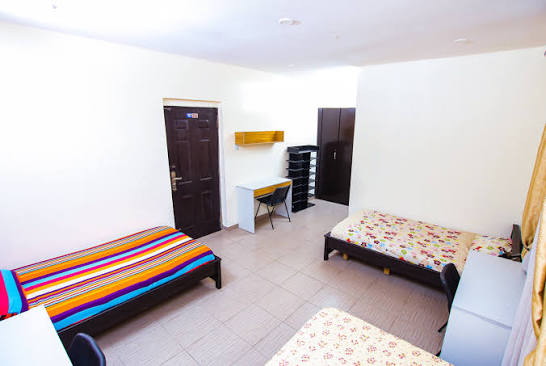
University halls of residence. Owned or partnered by the university. Usually the simplest route for a first year, with bills included, a resident adviser and a room that is ready when you arrive. Priority is often given to first year and international students, and the contract is typically for the academic year.
Purpose built student accommodation. Private blocks built for students, often close to campus, with en suite rooms, shared kitchens, study rooms, gyms and social spaces. More expensive than halls in most cities, but usually better maintained and more flexible on contract length, with some operators offering 44 or 51 week terms.
Shared private housing. A house or flat rented from a private landlord, usually by a group of students on one joint tenancy. The cheapest option per person in most cities, and the least regulated in practice. You deal with the landlord directly, bills are usually separate, and the condition of the property varies enormously.
Homestay. A room in a family home, often with meals included. Common for younger students, language students and anyone who wants a soft landing in a new country. Less privacy, more support, and usually arranged through the university or an agency.
Studio or self contained flat. Your own kitchen and bathroom, no flatmates. The most privacy and the highest cost. Often used by postgraduate students and mature students who do not want shared living.
What Is Usually Included
The difference between an all inclusive rent and a rent plus bills can be 15 to 25 percent of the monthly cost, so read the inclusion list before comparing headline prices.
| Item | Halls and purpose built | Shared private housing |
|---|---|---|
| Electricity and gas | Usually included | Usually separate |
| Water | Usually included | Usually separate |
| Internet | Usually included | Sometimes, often slow |
| Contents insurance | Often included | Rarely |
| Cleaning of shared areas | Usually included | Your responsibility |
| TV licence | Not usually | Not usually |
| Council tax or local property tax | Usually exempt for students | Exempt only with a valid certificate |
In the United Kingdom, full time students are generally exempt from council tax, but the exemption must be claimed and it does not cover a property where a non student also lives. Similar reliefs exist in Ireland and parts of Australia and Canada, with local rules that change.
Typical Cost Ranges
These are indicative monthly ranges for 2026, in local currency, to give a sense of proportion rather than a quote.
| Market | Halls or purpose built | Shared private housing |
|---|---|---|
| United Kingdom, London | 900 to 1,700 GBP | 700 to 1,200 GBP plus bills |
| United Kingdom, other cities | 550 to 1,000 GBP | 400 to 800 GBP plus bills |
| Ireland, Dublin | 800 to 1,400 EUR | 600 to 1,000 EUR plus bills |
| Canada, Toronto | 1,100 to 1,800 CAD | 700 to 1,300 CAD plus bills |
| Australia, Sydney | 400 to 700 AUD per week | 300 to 550 AUD per week plus bills |
| Germany, Berlin | 400 to 800 EUR | 350 to 650 EUR plus bills |
Two patterns hold across almost every market. Capital cities cost materially more than regional cities, and purpose built blocks cost more than shared housing for the same city. The gap between them is the price of convenience, maintenance and a contract that is easier to exit.
The Contract Is the Real Decision
A tenancy agreement is a legal document, and student contracts have specific features worth understanding before you sign.
Joint and several liability. In a shared house, everyone on the tenancy is responsible for the whole rent, not just their share. If one flatmate leaves or stops paying, the landlord can pursue the others. Purpose built blocks usually let each student a room on an individual contract, which removes this risk.
Fixed term versus periodic. Most student contracts are fixed for 44 or 51 weeks. Leaving early does not usually end the obligation unless there is a break clause or you find a replacement tenant.
Guarantor requirements. Many landlords ask for a guarantor, often a parent, who must be resident in the same country and demonstrate income. International students without a local guarantor are sometimes asked to pay several months upfront, or to use a guarantor service.
Deposit protection. In England and Wales, a tenancy deposit must be protected in a government approved scheme within 30 days, and the landlord must give you the scheme details. The GOV.UK tenancy deposit guidance sets out the rules and what to do if a landlord fails to protect it. Scotland and Northern Ireland have their own schemes, and most other countries have an equivalent bond authority.
Holding deposits. In England, a holding deposit is capped at one week's rent and a tenancy deposit at five weeks' rent where the annual rent is under 50,000 pounds. If the tenancy does not proceed for a reason that is not your fault, the holding deposit should be returned.
UKCISA publishes guidance for international students on housing, deposits and what to do when something goes wrong. The UKCISA advice pages are written for people arriving from abroad, which makes them more useful than a general tenant forum when your question is about guarantors or proof of address.
Before You Sign
Six checks that prevent most disputes.
- Licensing. In the UK, larger shared houses need a licence from the local authority. Ask for the licence number, or check the council register.
- Inventory. Photograph every room, every mark and every appliance on the day you move in, and send the images to the landlord the same day.
- Safety certificates. Ask for the gas safety certificate and the electrical certificate. A landlord who cannot produce them is a landlord who cuts corners elsewhere.
- Bills cap. If bills are included, check whether there is a fair usage cap. Unlimited is rarely unlimited.
- Commute. Walk the route to campus at the time you would actually travel. A 20 minute walk on a map can be a 45 minute bus ride in winter.
- Exit terms. Ask in writing what happens if you need to leave early, and whether a replacement tenant is allowed.
Paying for Accommodation From Abroad
This is the part that catches international students, and it is rarely explained properly.
You will usually make three separate payments: a holding deposit to secure the room, a security deposit before the contract starts, and the rent itself, often in instalments tied to your student finance or your family's schedule.
Three problems recur.
Currency. Rent is priced in the local currency. If you pay from a different currency, the amount that arrives depends on the rate and the fees on the route, not on the amount you typed into the form.
Reference and name matching. Accommodation providers reconcile payments by name and student or tenancy reference. A payment in a parent's name with no reference can sit unmatched for days, which is uncomfortable when a deadline is approaching.
Shortfalls. Intermediary bank deductions can leave the received amount below the invoice, and the provider will treat the balance as outstanding.
This is the practical case for a payment route built for outbound transfers. DapsyPay runs on conventional rails such as SEPA and ACH, with no transfer limits, transparent pricing and delivery straight to the beneficiary bank account. That means the deposit or rent instalment arrives in full, in the provider's currency, with the reference attached, so the accommodation office can match it and confirm your room without a week of email.
For a wider look at the timing of these payments, our guide to choosing a cross-border payment gateway explains how settlement schedules work. If your accommodation costs sit alongside an import order for a family business, importing goods from Dubai covers the landed cost side. And if a vehicle is part of the move, importing motorcycles sets out the duty and registration steps.
Budget Beyond the Rent
Students consistently underestimate the cost of starting a tenancy.
- Deposit, usually one month or five weeks of rent.
- First month or first instalment paid before arrival.
- Bedding, cookware and a desk lamp.
- Transport pass for the first month.
- Contents insurance if the accommodation does not include it.
- A small buffer for the first utility bill, which often arrives later than expected.
A realistic startup budget is one and a half to two months of rent on top of the deposit. Planning for that avoids the common pattern of arriving with enough for rent and not enough for everything else.
Unipol works with universities and accommodation providers on standards in student housing, and its guidance is a useful benchmark when you are assessing whether a building is professionally run. The Unipol standards work covers management, safety and maintenance, which are the things a virtual viewing cannot show you.
Common Mistakes
- Signing a joint tenancy without understanding joint liability.
- Paying a deposit before confirming the landlord or provider is legitimate.
- Failing to protect the deposit or check that it was protected.
- Comparing rent without comparing what the bills include.
- Paying rent in the wrong currency and absorbing two conversions.
- Sending a payment without the tenancy reference.
- Arriving without photographs of the room's condition.
- Assuming a room will still be available after a verbal promise.
FAQ
Conclusion
Student accommodation is less about the room and more about the contract, the inclusions and the payment schedule. Choose the type that fits your budget and your need for support, read the tenancy terms properly, protect the deposit and photograph everything on day one.
Then treat the payment itself as part of the planning. Rent that arrives short, late or without a reference turns a straightforward move into a month of administration, and that is the one part of the process you can control completely.
Pay the Deposit in Full, With a Reference
Send deposits and rent instalments on conventional rails such as SEPA and ACH, with no limits, a fee you see before you send and the full amount landing in the provider account.
Visit dapsypay.com