
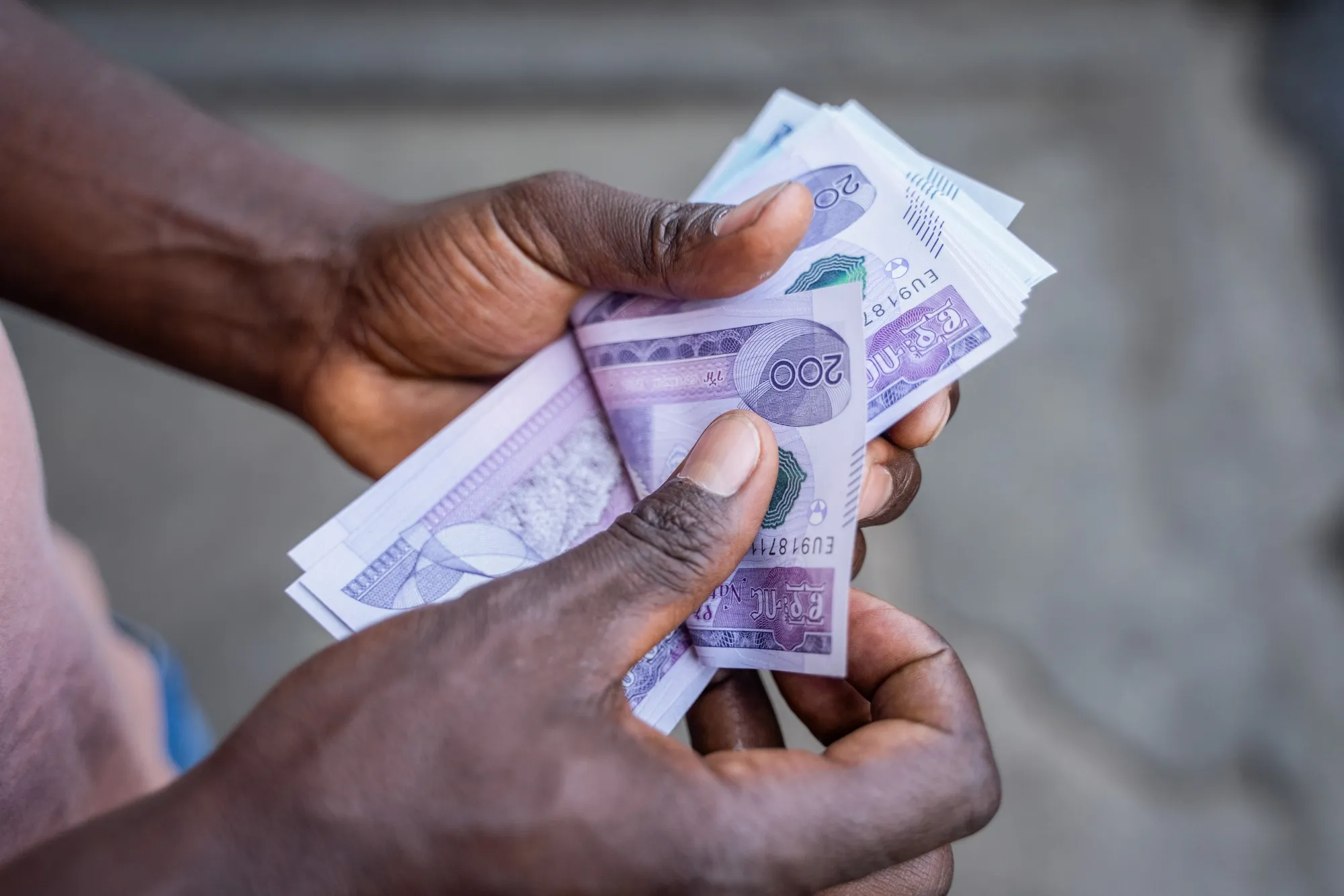
Quick Answer: The Ethiopian birr is the country's currency, issued by the National Bank of Ethiopia and traded under a managed float since July 2024. You cannot send birr abroad in any practical sense. International payments into Ethiopia arrive in dollars, euros or pounds, are converted by a local bank at the prevailing rate, and are credited in birr. Outbound payments depend on foreign exchange being allocated through the banking system, which is why the currency, the paperwork and the payment timing are all one problem.
What the Birr Is and Who Sets Its Value
The birr is divided into 100 santim, and the notes in circulation run from 1 birr to 200 birr. The National Bank of Ethiopia issues the currency and sets monetary policy, and its official site publishes the daily reference rates that banks and businesses use as the starting point for pricing.
For most of the last two decades the birr was managed within a narrow band, with the central bank rationing foreign exchange and adjusting the rate in steps. That produced a stable official rate and a very different street rate, a gap that shaped how every importer and exporter in the country did business.
That model changed in July 2024. As part of an International Monetary Fund supported reform programme, Ethiopia moved to a market determined exchange rate. The IMF country page documents the reform sequence, and the immediate effect was a sharp depreciation of the birr against the dollar, followed by a narrowing of the gap between the official and parallel rates.
What the Float Changed for Anyone Paying or Getting Paid
Three consequences matter for payments.
The rate moves daily, and sometimes sharply. A quote given in birr at the start of the month is not the same liability at the end of it. Contracts that do not address this transfer the entire currency risk to whoever is holding the birr.
Foreign exchange is still scarce. A market determined rate does not create dollars. Importers still queue for allocation through their bank, and the queue is influenced by the priority the central bank gives to fuel, medicine, capital goods and other essential imports. The price mechanism changed faster than the supply.
The parallel market narrowed but did not disappear. The premium between the official and informal rate compressed significantly after the float, which reduced the incentive to route money outside the banking system. It did not eliminate informal channels, and using them carries legal and counterparty risk.
Why You Cannot Simply Send Birr
The birr is not freely convertible and it is not held in meaningful volumes outside Ethiopia. There is no realistic offshore birr market, no correspondent banking network quoting birr, and no way for a bank in London or Lagos to settle a birr payment to an Ethiopian account.
What actually happens is a two currency transaction. The payer sends dollars, euros, pounds or another convertible currency. The receiving bank in Ethiopia converts at its own rate and credits the beneficiary in birr. The beneficiary never sees the foreign currency unless they hold a foreign currency account, which some businesses and exporters do.
This has a practical implication that catches people out. The amount the recipient receives depends on the bank's conversion rate on the day of processing, not the rate on the day you sent the money. If the birr moves between those two dates, the difference is real money, and nobody refunds it.
How an International Payment Into Ethiopia Actually Works
The sequence is consistent across most banks.
- The payer sends a convertible currency to the Ethiopian bank's correspondent account, usually in dollars or euros, with the beneficiary name, account number and purpose stated.
- The correspondent bank credits the Ethiopian bank. This step is where intermediary deductions can occur if the charge option is shared.
- The local bank applies its buying rate and converts to birr, or credits a foreign currency account if the beneficiary holds one.
- The bank runs compliance checks against the purpose stated, which is why the invoice, contract or import permit is often requested before release.
- The beneficiary account is credited in birr, usually within a few business days of the funds arriving at the local bank.
The weak link is rarely the international leg. It is documentation and allocation at the receiving end. A payment that arrives without a matching purpose description can sit while the bank asks for paperwork, and a payment for an import that has no permit on file may not be released at all.
Short payments are the other common failure. If the charge option is shared, intermediary banks deduct before the funds reach the local bank, and the invoice shows as partly settled. The mechanics of that shortfall are covered in our guide to why international clients pay late, and the import side of the same problem appears in our guide to importing an EV from China.
Paying Suppliers: Letters of Credit, Advance Payment and Franco Valuta
Import payments into Ethiopia follow a few standard structures.
- Letter of credit. The bank commits to pay the supplier against documents. This is the standard route for larger imports and it protects both sides, at the cost of fees, margin and processing time.
- Advance payment or cash against documents. Used for smaller orders and established suppliers. The bank still needs the import permit and the proforma invoice to allocate foreign exchange.
- Franco valuta. A scheme that allows an importer to use their own foreign exchange, held abroad or in a foreign currency account, to pay a supplier directly, with the goods then cleared through customs. It removes the allocation queue but requires strict documentation to prove the funds came from outside the banking system legitimately.
Each route needs a document pack: proforma invoice, import permit, business registration, tax identification, and often an insurance certificate. The payment is approved against the documents, not against the relationship.
For a supplier abroad, the money side has to be as clean as the paperwork. This is where conventional rails do their job. DapsyPay moves funds on standard international networks such as SEPA and ACH, with no limits on transfer size, direct delivery to the beneficiary bank account and batch sending for multiple invoices. On a corridor where the local bank will ask for the exact purpose and the exact amount, a payment that arrives whole and traceable is far easier to release than one that lands short after three intermediaries each took a fee. The platform does not replace the foreign exchange allocation process, which is a regulatory matter, but it removes the avoidable friction on the international leg.
Retention Accounts and Export Proceeds
If you sell Ethiopian goods abroad, the currency rules work in the other direction.
Exporters are generally required to repatriate proceeds through the banking system within a set period, and a share is converted to birr while a portion may be retained in a foreign currency account. The retention ratio and the timelines have changed more than once, so the current directive from the National Bank is the only reliable source.
Retention matters commercially for two reasons. It gives exporters a pool of foreign currency to pay their own overseas suppliers without queuing for allocation, and it provides a natural hedge against further depreciation. A coffee or horticulture exporter that keeps part of its proceeds in dollars can price the next contract with more confidence than one that converts everything on the day it arrives.
The Cost Stack on an Ethiopian Payment
| Cost line | What it is | Who usually bears it |
|---|---|---|
| Sending bank fee | Fixed or percentage charge to initiate | Payer |
| Correspondent deductions | Charges by intermediary banks | Shared unless stated |
| Local bank commission | Handling and conversion charge | Beneficiary or payer by agreement |
| Exchange rate margin | Difference between interbank and customer rate | Payer or beneficiary depending on currency of invoice |
| Letter of credit fees | Opening, advising, confirming, amending | Importer, sometimes shared |
| Documentation and permit costs | Import permit, insurance, authentication | Importer |
| Delay cost | Storage, demurrage, lost discount | Importer |
Add the delay cost deliberately. A payment that takes two weeks to clear documentation can cost more in port storage than every bank fee combined, particularly on containerised goods.
Inflation, Pricing and Contract Currency
Ethiopia has carried high double digit inflation since the reform period, and that changes how contracts should be written.
- Price long contracts in a convertible currency where the supplier will accept it, and state the conversion mechanism.
- Add a review clause for contracts above a few months, tied to a published index or the central bank reference rate.
- Invoice in the currency your costs are in. If your inputs are imported, a birr invoice quietly transfers the FX risk to you.
- Do not assume the rate on the invoice date is the rate on the payment date, and say in the contract which one applies.
Common Mistakes
- Sending birr to an Ethiopian account, or assuming a foreign bank can settle in birr.
- Quoting a supplier in birr and discovering the conversion rate moved before the payment was processed.
- Omitting the purpose of payment, which triggers a documentation query at the receiving bank.
- Using a shared charge option and leaving the invoice short by the intermediary fees.
- Assuming a letter of credit removes the need for an import permit.
- Converting all export proceeds on the day they arrive rather than using retention.
- Treating the parallel market as a normal commercial option.
- Forgetting that customs clearance timing depends on the payment being released, not just sent.
Frequently Asked Questions
Conclusion
The Ethiopian birr is a managed currency in transition. The rate now moves with the market, but foreign exchange remains a rationed resource, and every payment into or out of the country passes through a bank that will check the purpose before it releases funds.
Plan around three realities. Send convertible currency, never birr. Expect the conversion rate to be set on the processing date rather than the invoice date. And treat documentation as part of the payment, because an invoice without a permit is a payment that waits. Businesses that build those three into their process find that the corridor is slow but predictable, and predictable is what a supply chain actually needs.
Settle Cross-Border Invoices With Confidence
Fast transfers, transparent fees and direct bank delivery for import and supplier payments.
Visit dapsypay.com