
Buying a Stablecoin Is Three Decisions, Not One
Most guides treat buying a stablecoin as a single action: pick a platform, enter an amount, done. In practice it is three decisions that each carry cost and risk.
The first is which stablecoin to buy. The second is which route to buy it through, because the route determines your price, your verification burden and whether you can move the balance afterwards. The third is which network to receive it on, which is the decision that causes the most expensive mistakes, since a stablecoin sent on the wrong network can be unrecoverable.
Get those three right and buying a stablecoin is about as complicated as buying anything else online. Get the third one wrong and you can lose the entire amount while every step appeared to succeed.
Quick answer: To buy stablecoins, choose a dollar pegged token such as USDT or USDC, then buy through one of three routes: a centralised exchange, a peer to peer marketplace, or a payment platform that sells stablecoins directly into a wallet. Verify your identity, fund the purchase by bank transfer or local payment method, and select the network that matches the wallet you will send to. Compare the total cost, meaning price plus fee plus network fee, rather than the headline rate, and always send a small test transfer before moving a large balance.
Which Stablecoin Should You Buy
A stablecoin is a token designed to hold a steady value, usually one US dollar. It does that by holding reserves against each token, or by over collateralising the position with other assets.
Two dominate the market for payments.
USDT, issued by Tether, is the most widely accepted stablecoin on exchange and among counterparties in emerging markets. Tether publishes reserve breakdowns and attestation reports at tether.to, and reading one is a reasonable habit before holding a large balance.
USDC, issued by Circle, is known for a more conservative reserve structure and a strong compliance posture. Circle publishes its reserve reporting at circle.com.
Which one you buy should depend on what your counterparty accepts, not on which one has a marginally better reputation this month. A stablecoin nobody will accept is not a payment instrument. If your supplier quotes USDT on Tron, buying USDC on Ethereum creates two conversions and a network problem you did not need.
What about yield bearing and algorithmic variants
Yield bearing stablecoins pay holders a return, usually by lending reserves or holding short term government debt. They are useful, but they add a layer of counterparty risk: you are trusting both the issuer and whatever generates the yield.
Algorithmic stablecoins try to hold the peg through market incentives rather than reserves. They have a documented history of failure under stress, and for payment purposes they are the wrong tool. A payment instrument needs to be boring.
The Three Routes to Buy
Every purchase happens through one of three channels. Each has a distinct cost profile.
Route one: a centralised exchange
You register, verify identity, deposit funds, buy the stablecoin, then withdraw it to a wallet. This is the most familiar route and usually the cheapest for larger amounts, because order books are deep and spreads are tight.
The cost is in the withdrawal. Exchange withdrawal fees for the same token vary significantly by network, and the fee is charged per withdrawal, not per dollar. Withdrawing a small amount can cost a meaningful percentage. Verification can also take days for a new account, which matters if you need the stablecoin today.
Route two: peer to peer
You buy directly from another person through an escrow platform. This is popular in markets where local currency funding of an exchange is slow or restricted, and it often offers the best local payment options.
The costs are different rather than absent. P2P prices usually include a premium over the market rate, and the escrow protects the transaction only if you follow the platform rules exactly: pay through the stated method, do not release early, do not move the conversation off platform. Most P2P losses come from buyers who agreed to a "faster" arrangement outside escrow.
Route three: a payment platform that sells into a wallet
You buy the stablecoin directly into a wallet that is built for sending it onward. There is no separate withdrawal step, so there is no withdrawal fee and no second network decision after purchase.
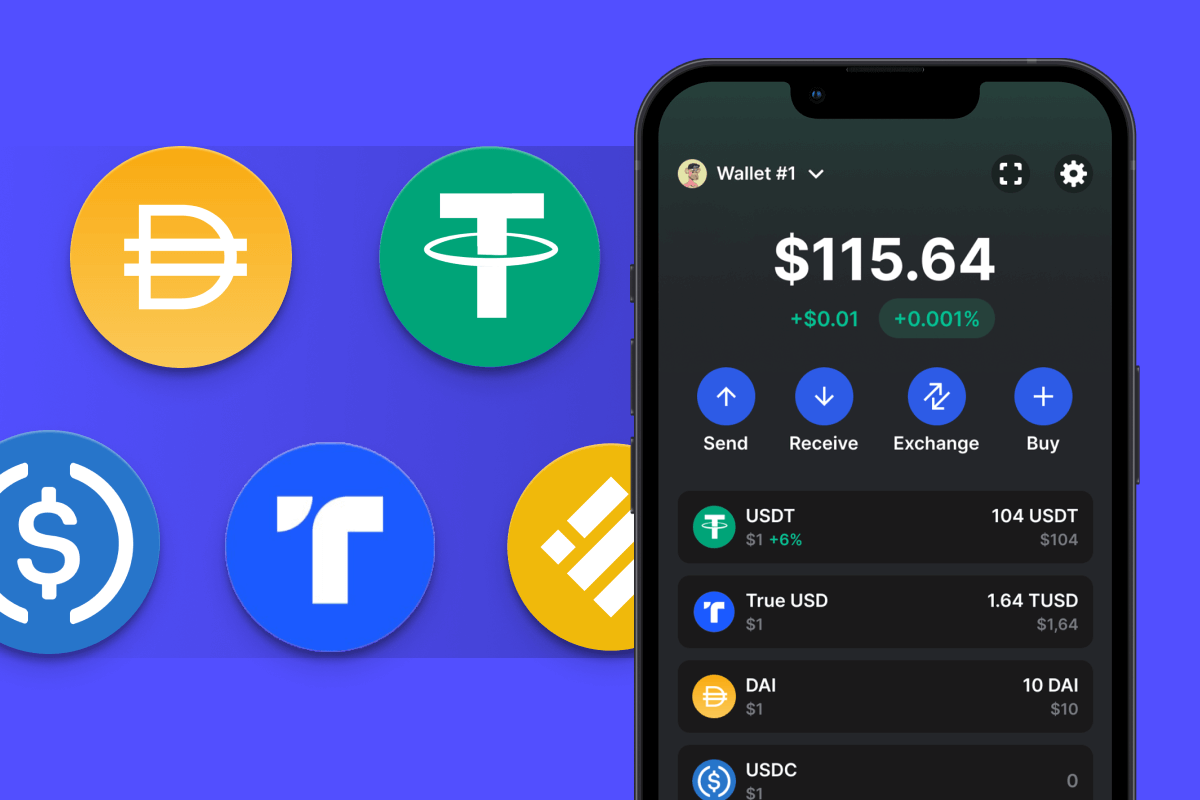
DapsyPay works this way. You buy stablecoins, hold them, and send them to a counterparty from the same place, with the network and fee shown before you confirm. For someone buying a stablecoin in order to pay a supplier rather than to trade, that removes two of the three decisions that cause expensive errors.
Choosing the Network, Carefully
This is the part that costs people real money.
A stablecoin is not a single thing living in one place. USDT exists on Tron as TRC20, on Ethereum as ERC20, on BNB Smart Chain as BEP20, on Solana as an SPL token, and on several other chains. USDC has a similar spread. Each version is the same token on a different ledger, and the ledgers do not talk to each other.
Practical rules:
- Match what the recipient accepts. Ask for the network, not just the token. "Send USDT" is an incomplete instruction.
- Check the address format. Tron addresses usually start with T, Ethereum and BSC addresses start with 0x. A mismatch is a warning sign, not a technicality.
- Send a small test first. A few dollars of test transfer costs almost nothing and confirms the address and network before you commit the balance.
- Understand the fee model. Tron and BSC transfers generally cost less than Ethereum mainnet transfers, though fees move with network demand. Solana transfers are usually the cheapest of the four.
- Do not assume a recovery is possible. Wrong network transfers are frequently unrecoverable. The receiving platform may not control the keys, and the sending platform usually cannot reverse a confirmed transaction.
Binance Academy maintains a plain language reference on token standards and networks at academy.binance.com, useful for checking a specific network before a first transfer.
Step by Step: Buying Stablecoins to Send
- 1. Confirm what the recipient needs. Token, network, exact address, and whether a memo or tag is required.
- 2. Choose your route. Exchange for size, P2P for local funding, payment wallet for buying and sending in one place.
- 3. Complete verification. Have your identity document and, for business accounts, registration documents ready.
- 4. Fund the purchase. Bank transfer is usually cheapest. Card funding is faster and more expensive. Local methods vary by market.
- 5. Buy the token. Check the price against a reference source such as coinmarketcap.com before confirming, and note the spread you are paying.
- 6. Select the network that matches the recipient. Not the cheapest one. The matching one.
- 7. Send a test amount. Confirm receipt with the counterparty before sending the balance.
- 8. Send the balance with a reference. Include the invoice number or order reference so the payment can be matched.
- 9. Save the transaction hash and a screenshot of the confirmation. This is your proof of payment.
The Real Cost of Buying a Stablecoin
The headline price is not the cost. Four layers sit around it.
- The spread. The difference between the market price and the price you are quoted. One percent on a five thousand dollar purchase is fifty dollars.
- The purchase fee. A flat or percentage fee charged by the platform.
- The funding cost. Bank transfers are often free, card funding is not, and local payment methods vary.
- The network fee. Charged when you move the token, and it varies by chain and by congestion.
Add those four and compare the result as a percentage of the amount you actually end up holding. That number is the only fair basis for comparing two routes.
Custody: Where the Stablecoin Lives
Once you own the token, you have to keep it somewhere. There are two models.
Custodial. The platform holds the keys. You log in and see a balance. This is simpler, and it is what most people use for balances they intend to spend. The trade off is that you rely on the platform's security, solvency and withdrawal process.
Self custodial. You hold the keys, usually in a mobile or hardware wallet. You control the asset completely, and you also carry complete responsibility. Lose the recovery phrase and the balance is gone. There is no support desk.
For a payment balance that moves regularly, custodial is usually the practical choice. For a long term reserve, self custody with a hardware wallet is the stronger option. Many people use both, keeping a working balance on a platform and a reserve offline.
Buying to Send Versus Buying to Hold
These are different activities and they should not share a mental model.
If you are buying to pay a supplier, the priorities are price certainty, network compatibility, a fast exit, and a clean record of the transaction. You are not trying to time the market. You are trying to move value from one place to another at a known cost, and the stablecoin is simply the vehicle.
If you are buying to hold, the priorities are issuer quality, reserve transparency and custody. You are taking a position on the issuer's ability to maintain the peg, and you should size it accordingly.
Most expensive mistakes happen when someone buys for one purpose and behaves as if they bought for the other: holding a payment balance for months, or rushing a long term position into a transfer under time pressure.
Compliance and Records
Stablecoins are fast and borderless. They are not anonymous, and platforms are required to verify customers and monitor transactions in most jurisdictions.
Keep a simple record for every purchase and transfer: date, amount, token, network, transaction hash, counterparty, and the purpose. If you are a business, this record is what an accountant, an auditor or a bank will ask for, and reconstructing it months later is painful.
For a business paying overseas suppliers, a payment platform that issues a clear confirmation for each transfer saves hours at reconciliation time. DapsyPay keeps the purchase, the balance and the outgoing transfer in one place, so the record exists without anyone assembling it afterwards.
Common Mistakes
- Sending a token on the wrong network because the fee looked lower.
- Skipping the test transfer on a first payment to a new address.
- Buying a stablecoin the counterparty does not accept.
- Agreeing to move a P2P trade outside escrow.
- Holding a large balance on an exchange with no plan for withdrawal.
- Comparing platforms on the displayed price while ignoring the spread, fee and network cost.
- Treating a stablecoin balance as risk free because the price is pegged.
Frequently Asked Questions
Conclusion
Buying a stablecoin comes down to three decisions: which token, which route, which network. The first is a question about what your counterparty accepts, the second is a question about cost and funding, and the third is the one that decides whether the money arrives at all.
Buy the token your recipient will take, on the network they specified, through a route whose total cost you have actually calculated. Test before you send, keep a record of every transfer, and separate your working balance from your reserve. Done that way, a stablecoin is a plain, practical payment tool rather than a speculative position with a payment label.
If you are settling a supplier invoice after the transfer, our guide to invoicing international clients covers the references and terms that make reconciliation simple. Businesses paying North American counterparties will find the account details in sending money to Canada, the rate mechanics behind any conversion are explained in why currency exchange rates change, and if you are weighing card funding for a purchase, read whether a credit card can be used to send money.
Buy, Hold and Send Stablecoins in One Place
Buy USDT or USDC, pick the right network, and send with the fee shown before you confirm.
Visit wallet.dapsypay.com