
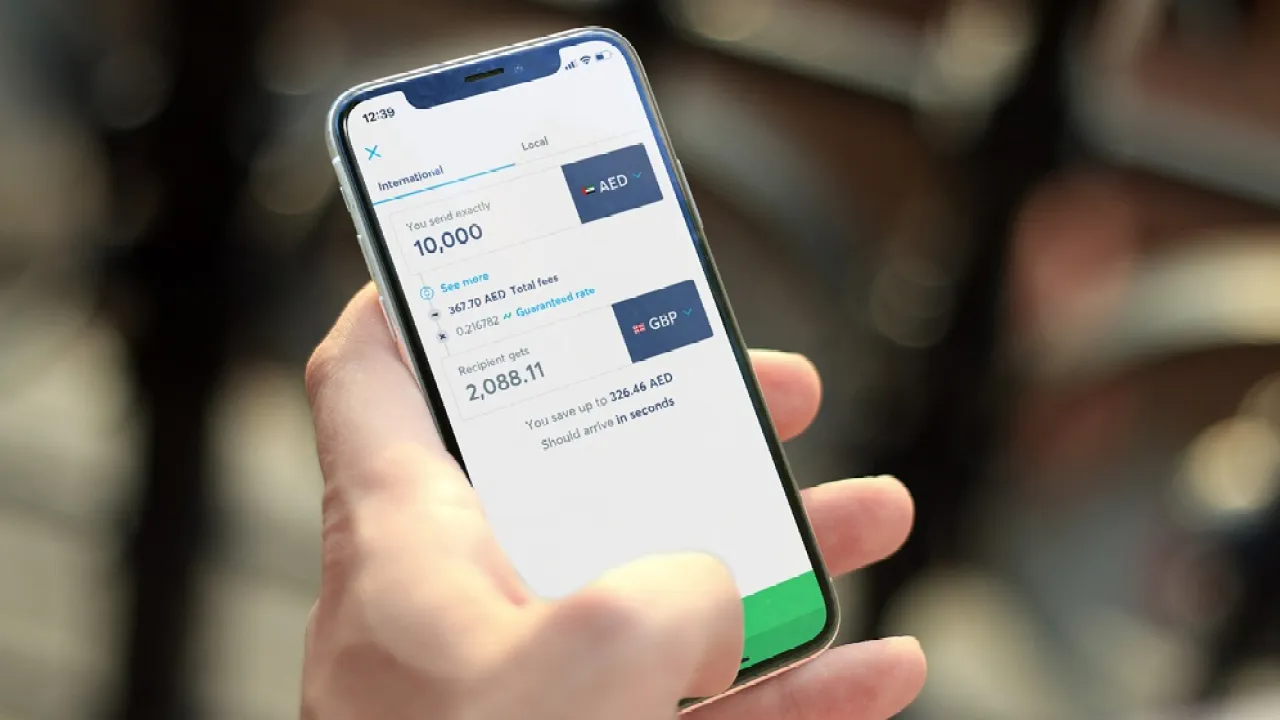
Quick Answer
To send money to Dubai, you need the beneficiary's full name, their IBAN starting with AE, the bank name and the SWIFT code. Then choose a route: a bank wire for large sums, a payment platform for speed and transparent pricing, or an exchange house if you are sending cash. Costs come from three places at once, the transfer fee, the FX margin and any correspondent charges. Confirm who pays the intermediary fees before you send, keep the invoice or purpose ready, and check the amount that arrives rather than the amount you sent.
Why Dubai Payments Need Their Own Guide
The United Arab Emirates is one of the easiest places in the world to receive money and one of the most expensive to send money to badly. The currency is pegged, the banking system is deep, and the regulatory expectations are high, which means a payment that is nearly right is treated as wrong.
Three details trip up first time senders.
The IBAN. UAE account numbers are wrapped in a twenty three character IBAN beginning with AE. An account number on its own is not enough, and a single transposed digit sends the payment into a repair queue.
The bank, not the branch. Dubai has local banks, international banks and free zone entities. The SWIFT code belongs to the institution, and the beneficiary's account must be with that institution. Sending to the right bank name with the wrong SWIFT code fails.
The purpose. Payments are screened for sanctions, fraud and trade compliance. A payment described only as "services" or "family support" is more likely to be queried than one supported by an invoice, a contract or a tuition letter.
The Central Bank of the UAE sets the rules that banks apply to incoming transfers, and those rules explain most of the questions you will be asked.
The Main Routes Compared
| Route | Best for | Watch out for |
|---|---|---|
| Bank wire through SWIFT | Large sums, property, corporate payments | Correspondent deductions, unclear FX rate, two to five business days |
| Payment platform | Supplier invoices, tuition, regular business payments | Verification limits on new accounts, currency availability |
| Exchange house | Cash pickup, smaller amounts, walk in service | Rate margin, paperwork, branch hours |
| Card payment | Small one off purchases | Card fees, FX markup, chargeback risk for the recipient |
The cheapest option depends on the amount. A card is fine for a hotel booking. It is a poor way to pay a supplier invoice of fifty thousand dollars, because the FX markup alone can exceed the entire fee on a bank transfer.
Step by Step: Sending Money to Dubai
- Confirm the beneficiary details in writing. Full legal name as it appears on the account, IBAN, bank name, SWIFT code and country. Ask for a screenshot of the account details page rather than a typed message.
- Agree who pays the charges. Shared, sender pays or beneficiary pays changes the amount received. The default on many wires is shared, which means deductions along the chain.
- Decide the currency. Sending in AED removes conversion from the recipient's side. Sending in your own currency usually means the recipient's bank applies its own rate, which you cannot see in advance.
- Attach the supporting document. Invoice, contract, tuition letter or tenancy agreement. Reference the invoice number in the payment narrative.
- Check the rate and the all in cost before confirming. Write the amount the beneficiary will receive, not just the amount you are sending.
- Keep the confirmation. A payment receipt with a reference number is the only thing that helps if the funds do not arrive.
- Verify arrival with the beneficiary. Do not assume delivery because your account was debited.
What It Really Costs
Every transfer has up to four cost layers, and only one of them is usually advertised.
- The transfer fee. A fixed or percentage charge from your provider. Easy to see, rarely the largest cost.
- The FX margin. The gap between the mid market rate and the rate you are given. On a large payment this is almost always the biggest number.
- Correspondent deductions. Intermediary banks may take a fee from the amount in transit when charges are shared.
- Recipient bank charges. Some banks deduct an incoming fee before crediting the account.
The World Bank's Remittance Prices Worldwide database has tracked the global average cost of sending two hundred dollars at around six percent for years, with bank routes consistently above the average. The lesson scales up: on a business payment, a two percent FX margin is often larger than every visible fee combined.
A practical test is to ask two questions of any provider. What rate are you using, and what exact amount will the beneficiary receive? A provider that answers both clearly is usually cheaper than one that quotes only a fee.
Documents and Details That Must Be Right
Dubai banks are rigorous because the jurisdiction is a major trade and re export hub. Expect checks on the following.
- Name matching between the payment instruction and the account holder record.
- A clear purpose that fits the amount. Large personal payments with no explanation attract questions.
- An invoice or contract for commercial payments, ideally showing the same goods or services as any shipping document.
- Source of funds evidence for unusually large transfers, especially from a new relationship.
- Sanctions screening on the beneficiary and any intermediary named in the chain.
None of this is unusual. It is the standard cost of operating in a well regulated market, and preparing for it is faster than answering questions after the payment is frozen.
Why Payments Get Held or Returned
Most failed payments are not lost. They are parked.
A name mismatch is the most common cause. So is an IBAN that belongs to a different branch or a closed account. A missing purpose code delays screening. A payment that exceeds a provider's tier limit waits for additional verification. A sanctions hit, even a false positive on a common name, stops the payment until it is manually cleared.
Recovery is straightforward when the sending provider is responsive. It is painful when the only support channel is an email address. Before you send a large amount with any provider, test the support path with a small question and see how long a real answer takes.
For corporate payments, the fix is usually procedural rather than technical. Keep a verified beneficiary file, require two approvals for new payees, and re confirm bank details by phone before the first payment. Invoice fraud often works by sending a convincing email with new account details, and the only reliable defence is a call to a number you already had.
Business Payments and Bulk Transfers
A single transfer to Dubai is a task. Twenty of them a month is an operation. Payroll for staff in the UAE, retainers for agencies, deposits for suppliers in Jebel Ali, rent for a warehouse in Al Quoz, and freight settlements that arrive without warning.
At that point the questions change. Can you upload a batch instead of typing each payment? Can you see the total cost before you approve? Does the recipient get the exact amount on the invoice? Is there a per transaction ceiling that splits a large payment into pieces?
DapsyPay is designed around those questions. Payments move on conventional international rails such as SEPA and ACH, there are no transfer limits, and bulk sending is part of the product, so a finance team can clear a full payment run in one instruction. Fees are transparent before confirmation and funds land directly in the beneficiary's bank account, which means the amount on the invoice is the amount that arrives.
If your Dubai payments are tied to imports, the duty calculation in our guide to HS codes and import costs belongs in the same forecast, and the approval workflow in how to pay invoices will stop a duplicate payment before it leaves.
How Long It Takes
Timelines depend on the route, the currency and the cut off. Domestic UAE transfers settle quickly. International wires to the UAE typically take between one and five business days, and the range is wide because correspondent chains vary.
Three things extend it. A payment submitted after the cut off starts the next working day. A currency that needs conversion in the middle of the chain adds a step. A compliance query adds as long as it takes to answer.
If a payment is urgent, the correct move is not to send it twice. It is to confirm the reference number, ask the provider for the current status, and check whether the beneficiary's bank has placed a query. Duplicate payments create a recovery problem that takes far longer than the original delay.
Common Mistakes
- Typing the IBAN manually from a message instead of copying a verified record.
- Sending in your home currency and assuming the recipient gets a fair conversion.
- Choosing shared charges on a payment where the invoice requires the full amount to arrive.
- Leaving the purpose blank or vague.
- Splitting a large payment into smaller ones to dodge a limit, which can look like structuring.
- Paying a "new" bank account from an email without calling to verify.
- Assuming a debited account means a credited beneficiary.
Frequently Asked Questions
Conclusion
Sending money to Dubai is simple when the details are right and expensive when they are nearly right. Verify the IBAN, agree who pays the charges, state the purpose and confirm the amount that will arrive.
Then choose the route on total cost rather than the fee alone. The difference between a good and a bad provider rarely shows up in the transfer charge. It shows up in the rate, the deductions and the week you lose when something goes wrong.
For business payments, treat the corridor as an operation rather than a task. Batches, approvals and a verified beneficiary file remove most of the risk before the first dirham moves.
If you want to understand what happens after the money leaves your provider, the explainer on how clearing banks power cross-border payments follows the settlement chain, and the school fee checklist in paying school fees from abroad applies the same verification discipline to education payments.
Send to Dubai on Rails You Can Predict
Fast payments on conventional rails such as SEPA and ACH. No limits, transparent fees, and bulk sending built for business owners.
Visit dapsypay.com