
Quick Answer
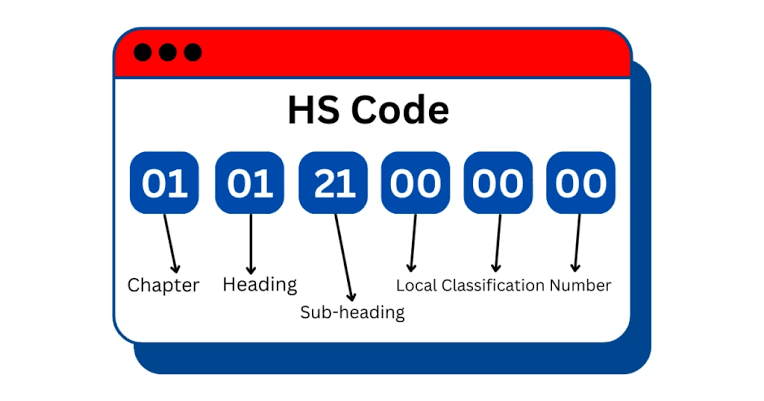
An HS code is a six digit product classification used by customs authorities worldwide, set by the World Customs Organization. The first two digits identify the chapter, the next two the heading, and the last two the subheading. Your HS code determines the duty rate, the tax treatment and often whether a shipment needs a permit. A wrong code can mean overpaying, underpaying and facing a penalty later, or a shipment held at the border. Importers should classify before ordering, confirm the national tariff line, and build the duty into landed cost.
What an HS Code Actually Is
The Harmonized Commodity Description and Coding System is a numbering system, not a tax policy. It exists so that a customs officer in Rotterdam and a customs officer in Lagos describe the same product in the same way.
The World Customs Organization maintains the nomenclature and updates it roughly every five years. More than two hundred countries and territories build their national tariffs on top of those six digits, then add two or four more for local policy.
A finished national code is therefore longer than six digits. The first six are internationally comparable. The extra digits are where countries diverge, and where most classification mistakes happen.
How the Six Digits Work
Take a simple category such as footwear. Chapter 64 covers footwear, gaiters and similar articles. The heading narrows it to waterproof or not, outer soles and uppers. The subheading goes further into material.
- Chapter: the first two digits, a broad product family. Sixty four is footwear, eighty five is electrical machinery, ninety four is furniture.
- Heading: digits three and four, a narrower group within the chapter.
- Subheading: digits five and six, the internationally agreed level that most trade statistics use.
- National line: any digits after six. These differ by country and carry the actual duty rate you will pay.
A common misunderstanding is that one product has one code everywhere. It has one six digit code, but different national lines, rates and restrictions. The same pair of trainers can attract different treatment in the EU, the UK, Nigeria and the UAE.
How to Find the Right Code for Your Product
Classification is a reasoning exercise, not a search result. The steps below are the same ones a customs broker follows.
- Describe the product precisely: material, function, component, packaging and intended use.
- Start at chapter level using the section and chapter notes, which carry legal weight.
- Read the heading text and the explanatory notes for that heading.
- Apply the General Interpretative Rules when two headings could apply. Rule three matters more often than people expect.
- Move to the national tariff line for the destination country and confirm the rate and any restrictions.
- Write the reasoning down. If customs asks later, the note is your defence.
Official tariff databases are the reliable source. The UK publishes its full tariff at trade-tariff.service.gov.uk, and the United States publishes the Harmonized Tariff Schedule at hts.usitc.gov. Both let you search by description and read the chapter notes attached to the line.
Search tools are a starting point, not an answer. The database will offer several plausible lines, and the notes decide between them.
How the Code Sets Your Duty, Tax and Levies
Duty is calculated on customs value, which is usually the transaction value plus international freight and insurance for most importing countries. The rate comes from the tariff line. Tax, such as VAT or a consumption levy, is usually applied on top of the duty inclusive value.
| Cost component | Basis | Where the HS code enters |
|---|---|---|
| Customs duty | Customs value times tariff rate | Sets the rate itself |
| Import VAT or sales tax | Value plus duty plus some fees | Indirect effect through duty |
| Excise or special levy | Quantity, value or both | Determines whether the levy applies |
| Permits and standards | Product category rules | Triggers or removes a requirement |
| Clearance fees | Per entry or per container | No direct effect, but classification errors add entries |
This is why two importers buying the same container can pay very different amounts. The difference is rarely the freight rate. It is the line they declared and whether the supporting documents agreed with it.
Where Importers Get HS Codes Wrong
Errors cluster in predictable places.
- Classifying by product name instead of function. A cosmetic device and a medical device can look identical and sit in different chapters.
- Ignoring material composition. A bag made of leather and a bag made of coated textile often land in different headings.
- Using the supplier's code without checking. Suppliers classify for their own export regime, which is not always the same as your import regime.
- Assuming accessories follow the main item. Some do, many do not.
- Copying a competitor's paperwork. Their volume, origin and product version may differ from yours.
The cost of an error is not limited to the duty difference. A wrong code can invalidate a preferential rate claim, trigger a post clearance audit, add storage while the entry is corrected, and in serious cases lead to penalties. The International Chamber of Commerce publishes guidance on how trade documentation should describe goods consistently, and customs officers use exactly that consistency as a risk signal.
Preferential Rates and Trade Agreements
Many countries offer reduced or zero duty when goods originate in a partner country. The HS code determines whether the product is eligible at all. The origin evidence determines whether you can claim it.
Two conditions must both hold. The product must be covered by the agreement, and the shipment must carry valid proof of origin. A certificate that names a different product description from the invoice is the fastest way to lose a claim.
This is also where classification and sourcing decisions interact. Moving production to a different country can change the duty outcome far more than negotiating a freight rate. Model it before the order, not after the container arrives.
The Documents That Must Match
Customs compares documents to each other. Inconsistency is treated as a signal, even when the underlying shipment is honest.
- The commercial invoice description should align with the HS code and the quantity.
- The packing list should match the invoice line by line.
- The bill of lading or airway bill should use the same product description in plain terms.
- The certificate of origin should name the same goods and the same exporter.
- The import declaration should carry the national tariff line and the correct value build up.
If a shipment is held, the first thing to check is whether all five tell the same story. In most holds, they do not.
Estimating Landed Cost Before You Order
A landed cost estimate takes ten minutes and prevents most margin surprises.
- Confirm the HS code at six digits and the national line at destination.
- Get the duty rate, tax rate and any levy that applies to that line.
- Add freight and insurance to the goods value to reach customs value.
- Apply duty, then tax on the duty inclusive value.
- Add clearing agent fees, port charges, demurrage risk and inland transport.
- Convert everything at a realistic exchange rate, not the one on the day you budgeted.
- Add the cost of paying the supplier, including any FX spread and transfer fee.
The last item is frequently forgotten, yet it is the one you control most directly. A supplier invoice settled at a poor rate can cost more than the duty difference you spent a week negotiating.
Paying the Supplier and the Duty in the Same Week
An import rarely involves one payment. There is the deposit, the balance before shipment, the freight forwarder, the clearing agent and the duty itself. They land close together, and every one of them competes for the same cash.
When the payment side is slow or unpredictable, importers build a buffer into the price and hold stock longer than necessary. That buffer is the hidden cost of a bad payment route.
DapsyPay is built for this pattern. Payments run on conventional international rails such as SEPA and ACH, there are no transfer limits, and bulk sending lets you pay several suppliers or agents in one instruction. Fees are transparent at the point of confirmation, so the amount your supplier receives is the amount you planned for, and the funds land directly in the recipient's bank account.
That predictability is what makes a landed cost estimate hold. If you already know the duty line, the remaining variable is the payment, and that is the one you can fix today. Our guide to sending money to Dubai covers a common re export corridor, and the piece on how clearing banks power cross-border payments explains what happens after your money leaves.
Common Mistakes
- Classifying after the goods arrive instead of before the order is placed.
- Using a six digit code where the destination requires a longer national line.
- Letting the supplier choose the code without reviewing it.
- Forgetting that duty is charged on freight and insurance as well as goods.
- Claiming a preferential rate without valid origin evidence.
- Budgeting duty at last year's exchange rate.
- Treating a customs hold as bad luck when it is usually a documentation mismatch.
Frequently Asked Questions
Conclusion
The HS code is the smallest number on an import file and the one that decides the most. It sets duty, influences tax, triggers permits and shapes how quickly goods leave the port.
Classify deliberately, document your reasoning, confirm the national line and build the full landed cost before you commit to an order. Then remove the other variable by paying on a route you can predict.
Importers who do both rarely get surprised by a margin. The ones who skip either step usually discover the gap when the container is already on the water.
The accounts side of the same workflow is covered in our guide to paying invoices, and if the shipment is for a family member studying overseas, the checklist for paying school fees from abroad covers the timing and proof of payment.
Pay Suppliers and Agents Without the Delay
Fast payments on conventional rails such as SEPA and ACH. No limits, transparent fees, and bulk sending built for importers.
Visit dapsypay.com