
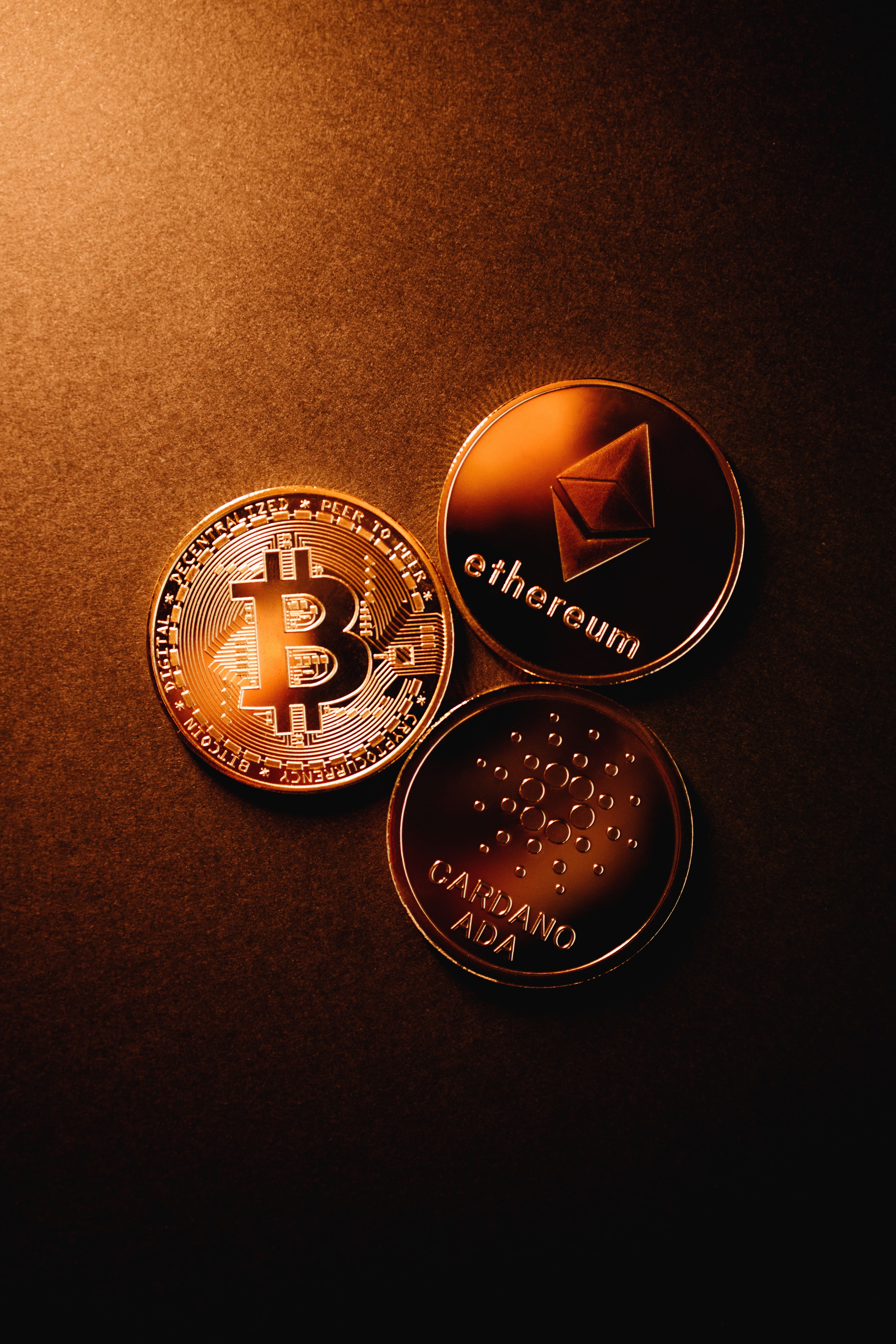
What Is a Gas Fee in Crypto
A gas fee is the small payment you make to a blockchain network for processing a transaction. It compensates the validators or miners who confirm your transaction and add it to the ledger, and it prevents spam by making every action cost something. On Ethereum, the fee is measured in gas units multiplied by a price. On other networks such as Tron, Solana and BNB Chain, the same idea appears as bandwidth, energy or a network fee.
Why Networks Charge a Fee at All
A blockchain is a shared record that thousands of independent computers keep in sync. Nobody owns the whole thing, so there is no billing department. Instead, the network needs a way to decide whose transactions get processed first and a way to stop people from flooding it with free, useless activity.
A fee solves both problems at once. It compensates the people who run the network for the work of confirming transactions, and it makes abuse expensive. This is why every serious network has some version of it, even when the name is different.
The term "gas" comes from Ethereum, which describes the fee as the fuel a transaction needs to run. The name stuck, and it is now used loosely for network fees on any chain, even where the underlying mechanism is different.
The Two Numbers Behind Every Gas Fee
Once you see the fee as two numbers, the whole system becomes much easier to reason about.
- Gas units. A measure of how much work a transaction requires. A simple transfer of tokens costs a fixed, small number of units. A complex action, such as interacting with a smart contract or a swap, costs more.
- Gas price. The price per unit of work, set in the network's own currency. This is the part that moves with demand.
Your fee is roughly the gas units multiplied by the gas price. So the fee changes for two different reasons: because the transaction is doing more work, or because the network is busier. A simple transfer on a quiet network is cheap. The same transfer during a spike is not.
Ethereum's own documentation explains this model in detail on ethereum.org, and Binance Academy covers network fees in beginner language. Both are useful for understanding the mechanics. Neither removes the need to check the fee before you confirm, which is precisely what a wallet built for stablecoin payments puts in front of you without the guesswork.
What a Gas Fee Is Actually Paying For
It helps to be precise about what leaves your wallet. The gas fee does not pay the person you are sending to, and it does not go to a company. It goes to the network, in the network's own currency.
That has three practical consequences.
- You need the network's native currency. To send USDT on Tron, you need a small amount of TRX available for the fee. To send on Ethereum, you need ETH. Running out of the native currency is the most common reason a transfer fails.
- The fee is separate from the amount. If you send 500 USDT, the 500 USDT arrives as 500 USDT. The fee is charged in addition, in the native coin.
- The fee is not refundable for a failed transaction. On most networks, work that was done is paid for even if the transaction fails. This is why sending with a fee that is too low, or with the wrong settings, can cost you without completing the transfer.
How Fees Differ Across Networks
The same stablecoin can travel on several networks, and the fee difference between them is often large. This is the single most practical thing to understand before you send anything.
| Network | What the fee is called | Paid in | Typical profile for a stablecoin transfer |
|---|---|---|---|
| Ethereum (ERC20) | Gas | ETH | Highest fees, best for large settlement where security matters most |
| Tron (TRC20) | Energy and bandwidth | TRX | Very low fees, widely used for USDT transfers |
| BNB Chain (BEP20) | Gas | BNB | Low fees, common for BNB Chain tokens |
| Solana | Network fee | SOL | Very low fees, fast confirmation |
This is why the network you choose matters as much as the amount you send. Two transfers of the same stablecoin can differ in cost by an order of magnitude purely because of the network selected. CoinMarketCap's asset pages, such as the USDT page, list the networks a token supports, which is the fastest way to check what your options are before you send. Checking that list is the first step. Carrying it out correctly, with the network labelled and the fee shown before you confirm, is where the platform does the heavier lifting.
Why Fees Move Up and Down
Fees are not fixed, and understanding why they change stops them from feeling random.
- Network demand. When many people transact at once, blocks fill up and the price of inclusion rises.
- Block space. Networks that confirm more transactions per second experience less congestion than those that do not.
- Priority. Many networks let you pay more to be included sooner, which is why two users sending at the same moment can pay very different fees.
- Network design. Some networks use a base fee that is burned and a tip that goes to validators, while others use a simpler model.
The practical takeaway is to check the current fee before a large transfer rather than assuming yesterday's number still applies.
How to Keep Crypto Transfer Fees Low
Fees are controllable, and a few habits make a real difference.
- Choose the right network. For a standard USDT transfer, a low fee network is often the sensible default, provided the recipient supports it.
- Send at quieter times. Fees tend to rise when a market is active and fall when it is calm.
- Keep a small balance of the native coin. A few dollars of TRX, ETH or SOL avoids a failed transfer for want of fee money.
- Batch where you can. Fewer transactions mean fewer fees, the same logic that applies to any payment system.
- Check the fee before confirming. Every serious wallet shows the estimated fee on the confirmation screen. Read it.
- Do not chase the lowest possible fee on an urgent transfer. A transaction that never confirms can cost more time than the fee you saved.
Where a Wallet Makes This Simpler
The theory is straightforward. The difficulty is in the moment, when a transaction screen shows a network you did not expect, a fee you did not anticipate, or a recipient address that belongs to a different chain.
This is the part a purpose built wallet is designed to handle. When you send stablecoins through DapsyPay, the network is labelled clearly at each step and the fee is shown before you confirm, so the cost of the transfer is visible rather than discovered afterwards. Sending is fast, and the transfer settles super fast once the network confirms it, while the amount you send arrives intact because the fee is charged separately in the native coin. For anyone moving USDT or USDC regularly, that clarity is the difference between treating stablecoin payments as a routine payment method and treating them as a gamble.
It also removes a common source of loss. The most frequent mistakes in crypto transfers, from sending on the wrong network to running out of fee currency, are decisions that a clear interface prevents rather than corrects.
Stablecoin payments are useful well beyond trading. Businesses use them to settle across borders, and if you are comparing them with a bank route, our guide on how to transfer money to China sets out how a documentation heavy corporate payment works. If a conventional transfer is delayed instead, why your wire transfer has not arrived and how to fix it covers the trace and recall process, and why banks freeze accounts after international transfers explains what triggers a compliance review. For readers weighing the wider cost of studying or living abroad, is studying abroad worth it looks at how payment costs add up over a whole course.
Common Mistakes With Gas Fees
- Forgetting to hold the native coin. A wallet with only USDT cannot pay a network fee on many chains.
- Sending on the wrong network. The fee is not the problem here. The compatibility is. Check that the recipient supports the chain.
- Setting the fee too low to save money. An unconfirmed transaction can be stuck for a long time.
- Assuming the fee comes out of the amount sent. On most networks it does not.
- Ignoring the fee on small transfers. On a high fee network, the fee can be a large share of a small amount.
- Trusting a fee estimate blindly on a congested network. Estimates move, and confirmation waits can change the real cost.
Frequently Asked Questions
Conclusion
A gas fee is the price of using a shared network, and once you understand it as gas units multiplied by gas price, it stops being mysterious. It goes to the network, it is paid in the native currency, and it is separate from the amount you send.
The part that matters in practice is network choice and visibility. Two transfers of the same stablecoin can differ hugely in cost, and a wallet that labels the network and shows the fee before you confirm spares you both the surprise and the mistakes. Learn the mechanics once, then let a clear interface handle the rest.
Send Stablecoins With the Network and Fee in View
Send USDT and USDC with the network labelled at every step, the fee shown before you confirm, and super fast on chain settlement.
Visit wallet.dapsypay.com