
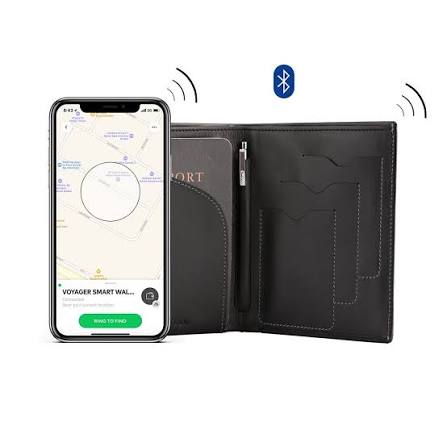
Quick Answer: A smart wallet is a crypto wallet whose account is a program on a blockchain rather than a single private key. That program can enforce rules: spending limits, approvals from more than one person, recovery through trusted contacts, and fees paid by someone else. The technology behind most smart wallets is account abstraction, which turns a wallet into a small application with its own logic. Convenience improves sharply, and so does the importance of auditing whoever controls the code.
The Wallet Problem Most People Learn the Hard Way
A standard crypto wallet is a key pair. One private key controls one address, and whoever holds the key holds everything at that address. There is no password reset, no customer service line, and no way to reverse a mistaken transfer.
That design is secure in a narrow sense. It is also unforgiving in ways that cost real money. A lost seed phrase means permanent loss. A phishing signature can drain a balance in one click. A business that needs two people to approve a payment has no native way to enforce that rule.
Smart wallets exist to close that gap. Instead of one key with total control, the account becomes a contract with rules written into it.
What a Smart Wallet Actually Is
A smart wallet is a wallet where the account itself is a smart contract deployed on a blockchain. The contract defines how transactions are authorised, what they are allowed to do, and what happens when something goes wrong.
In practice, a smart wallet usually has:
- An owner or a set of owners. One device, several devices, or a mix of people and devices.
- Rules for spending. Daily limits, per transaction limits, or allowlists of permitted addresses.
- A recovery method. A guardian set, a backup signer, or a time delayed reset.
- A way to pay fees. Either from the wallet balance or through a sponsor.
The user experience is designed to feel like a normal app. Behind it, every action is a contract call with conditions attached.
How Account Abstraction Makes It Work
The dominant standard for smart accounts on Ethereum and its compatible networks is ERC-4337, usually described as account abstraction. It changes how a transaction is submitted.
A conventional transaction is signed by a private key and sent directly to the network. An account abstracted transaction becomes a user operation: a structured request describing what the account wants to do. That request is picked up by a bundler, which packages several user operations together and submits them to a central entry point contract. The entry point verifies each operation against the rules of the sending account before executing it.
Three components matter:
- The account contract. Holds the rules: who can sign, what limits apply, how recovery works.
- The bundler. Submits operations on behalf of accounts that may not hold the native token for fees.
- The paymaster. Optionally pays the fee on the user's behalf, or accepts payment in another token such as a stablecoin.
Ethereum's own documentation on account abstraction is the clearest technical reference, and it is worth reading before choosing a wallet for business use. Binance Academy and Coinbase Learn both publish accessible explainers if you want the concept without the specification. None of them run payouts for you, which is the part that decides whether the model survives a month of real invoices. DapsyPay applies the same account technology to a payout workflow that includes recipient lists, references and exportable records.
The Four Benefits That Change Daily Use
1. Recovery Without a Seed Phrase Panic
A standard wallet's only backup is the seed phrase. A smart wallet can designate guardians: other wallets, devices or trusted people who can collectively authorise a recovery after a delay.
This does not eliminate risk. It changes the risk from "one lost phrase, total loss" to "a majority of guardians must act, within a defined window". For most users that is a meaningful improvement, and for businesses it is the difference between a recoverable incident and a write off.
2. Fees Paid by Someone Else
With a paymaster, a user can transact without holding the network's native token. A business paying contractors in stablecoins can sponsor the network fee so recipients receive the exact amount intended, without needing to acquire gas tokens first.
This is the single biggest practical unlock for payout use cases. Stablecoin balances stop being stranded because the wallet has no native token for fees.
3. Batched Transactions
A smart account can execute several actions in one operation: approve a token, transfer to twenty recipients, and record a reference, all in one confirmed transaction.
For payroll and supplier payouts, batching reduces the number of separate confirmations and the number of failure points. It also makes reconciliation cleaner, because one operation maps to one batch.
4. Rules That Enforce Themselves
Spending limits, allowlists and multi approval requirements are enforced by the contract, not by policy documents. If the rule says a transfer above a threshold needs two signatures, the chain enforces it.
That is a genuine control improvement for treasury teams used to relying on process.
Where Smart Wallets Run
Smart accounts are most mature on Ethereum and the networks that inherit its tooling, including Base, Arbitrum, Optimism and Polygon. Support varies by wallet provider and by network, so check compatibility before assuming a feature works everywhere.
Other ecosystems implement similar ideas differently. Solana uses program derived accounts and a different transaction model, and some wallets there offer comparable features without the ERC-4337 stack. The concept of a programmable account is broader than one standard.
Network choice also affects cost. Fees on a layer two network are typically a fraction of mainnet fees, which makes batching and sponsorship economically sensible for small payments.
The Risks That Do Not Disappear
A smart wallet is software, and software has failure modes.
- Contract bugs. A flaw in the account contract or a module can be exploited. Audits reduce the risk and do not eliminate it.
- Upgrade authority. Many smart wallets are upgradeable. Whoever holds the upgrade key can change the rules, so the governance of that key matters as much as the code.
- Paymaster dependency. If your fee sponsorship depends on a third party, their policy change or outage affects your payments.
- Guardian compromise. Recovery is a feature and an attack surface. Guardians should not all sit on one device or one email account.
- Phishing approvals. A malicious signature request can still be authorised if the user approves it. Account rules help only if they restrict what a single approval can do.
- Custody confusion. Some products call themselves smart wallets while holding the keys on the user's behalf. That is custodial. The label does not change who controls the funds.
The honest summary: smart wallets reduce operational risk and introduce code risk. For a business, that trade is usually worth making, provided the provider is transparent about audits and upgrade control.
Using a Smart Wallet for Stablecoin Payouts
The business case is strongest where payments are frequent, small and cross border.
A company paying fifty contractors in six countries faces three problems with conventional wallets: fee tokens, manual repetition and no spending controls. A smart account with batching, sponsorship and limits addresses all three in one layer.
The workflow looks like this:
- Fund the smart account with stablecoins on a low fee network.
- Load the recipient list with addresses and amounts.
- Set a batch operation with per recipient transfers and a reference field.
- Approve according to the account rules, which may require two signers.
- Confirm once, and let the batch execute.
- Export the operation record for reconciliation.
The reconciliation step is where most crypto payout flows break down, because a batch of fifty transfers is hard to match against fifty invoices unless references are structured from the start.
This is the workflow DapsyPay is built around. The platform handles stablecoin sending for businesses that pay abroad, with batch payouts, clear references on every transfer and a record set that maps to invoices rather than to raw transaction hashes. Balances and payouts sit in one interface, so a finance team does not need to run a separate node, manage gas tokens or reconcile across three tools.
The comparison worth making is not smart wallet versus bank account. It is smart wallet used well versus a pile of manual transfers. Ethereum's account abstraction documentation shows what the technology can do; a payments platform applies it to a job that has a deadline and an audit trail.
Stablecoin Rails and the Broader Payment Picture
Crypto payouts rarely sit alone. A business that receives stablecoins still pays freight, duty, certification bodies and staff, and those recipients usually want conventional bank credits.
That is why the practical architecture is usually layered. Stablecoins move value quickly across borders, and conventional rails such as SEPA and ACH deliver it into bank accounts where the recipient needs it. The guide on sending money without a bank account covers the fiat side of that handoff, and the piece on SONCAP certification shows how a compliance document can hold up a shipment while the payment sits waiting.
For importers specifically, the freight forwarder guide explains which payment points in a shipment are time critical, and the study abroad cost breakdown shows how the same payment mechanics apply to tuition deadlines.
How to Evaluate a Smart Wallet
Six questions separate a serious product from a demo.
- Is it actually non custodial? Who holds the signing keys, and can the provider move funds without you?
- Has the contract been audited, and by whom? Ask for the report, not the badge.
- Who can upgrade the contract? A multisig with named signers is different from a single admin key.
- Which networks are supported? Fees and finality differ, and a feature on one chain may be missing on another.
- How does recovery work in practice? Test it with a small balance before trusting it with a large one.
- What does the export look like? If you cannot reconcile, you cannot account for it.
Frequently Asked Questions
Conclusion
A smart wallet turns a crypto address into an account with rules, recovery and shared control. That is a meaningful upgrade over a single private key, especially for businesses moving stablecoins at volume.
The technology is not the hard part any more. The hard part is choosing a wallet whose controls you understand, on a network whose fees make sense, with a record set your finance team can actually use. Get those three right and the programmable account becomes infrastructure rather than experiment.
Send Stablecoins Without the Friction
Batch stablecoin payouts with clear references and records your finance team can use.
Visit wallet.dapsypay.com