
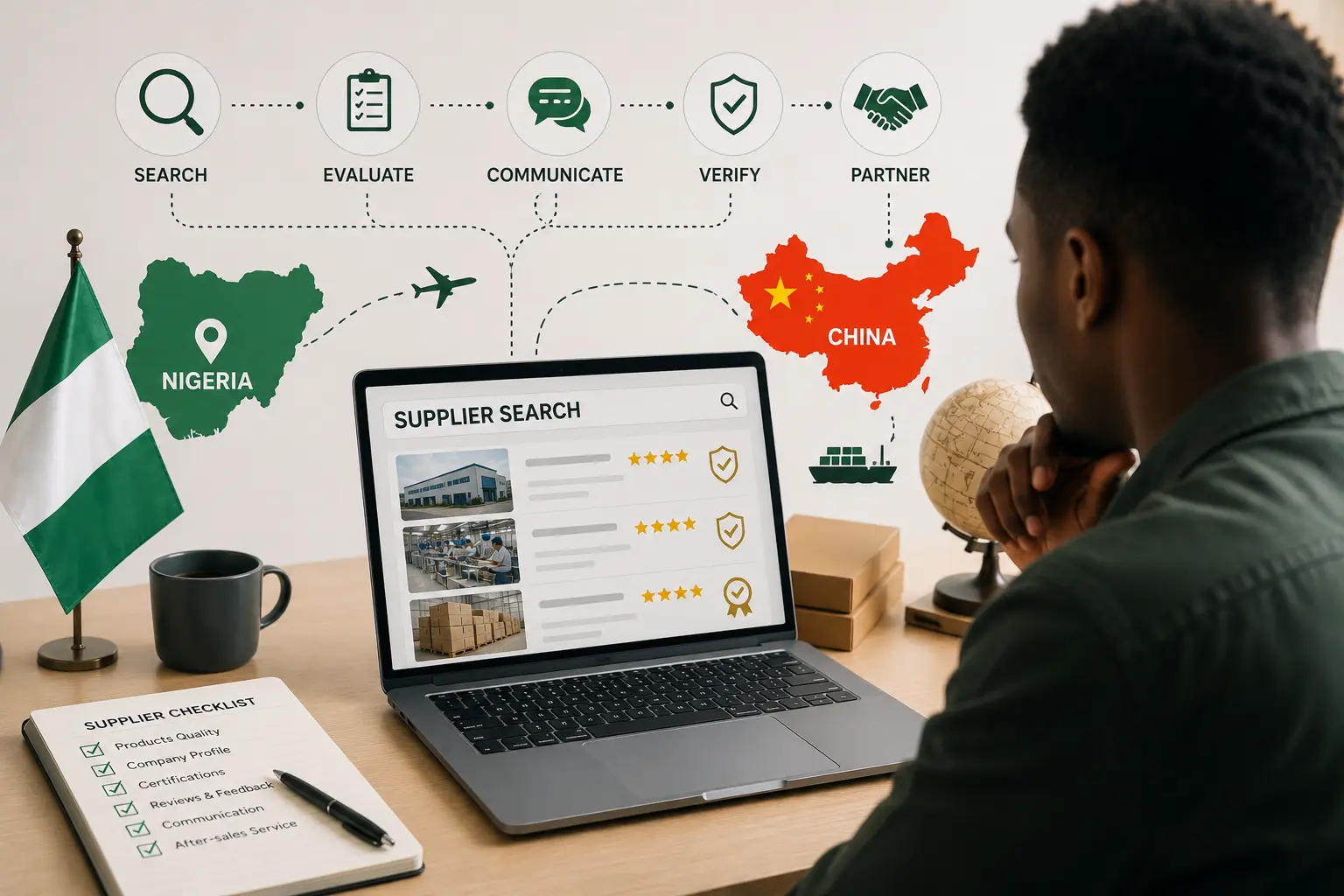
How to Find Reliable Suppliers in China in 2026
To find reliable suppliers in China, look on multiple channels rather than one marketplace, verify the company against official records, and test the relationship with a paid sample order before placing a production order. Treat verification as a process, not a formality: check the business licence, confirm whether the company is a factory or a trading house, ask for a video walkthrough, and never send a deposit to bank details that were changed by email after the quotation.
What a Reliable Supplier Actually Means
Reliability is not the same as being the cheapest. A reliable supplier delivers what was agreed, at the quality that was agreed, on the date that was agreed, and communicates honestly when something changes.
That is a higher bar than most buyers set, because price tends to dominate the first conversation. Price matters, but it is the easiest thing to compare and the least useful predictor of whether an order arrives. What predicts a good outcome is capability (can they actually make this), capacity (can they make your quantity in your window), communication (do they answer in useful detail), and verifiability (can their claims be checked against evidence).
Buyers who screen for those four things spend less time chasing orders and less money on repairs, replacements, and rework.
Where to Look: The Main Sourcing Channels
No single channel gives you everything, so a shortlist should come from several.
B2B marketplaces. Alibaba remains the most widely used starting point, with the largest pool of suppliers and a dispute mechanism for orders placed through the platform. Global Sources is strong on electronics and consumer goods and is often used for trade show listings. Both are directories, not guarantees: a listing proves that a company wants buyers, not that it can deliver. Discovery is only the first half of a sourcing decision, because the rate, the fee, and the delivery speed on the payment that follows are what decide the landed cost.
Domestic wholesale platforms. 1688 and similar Chinese-language platforms list domestic wholesale prices, which are often lower than export prices. They are difficult for overseas buyers to use directly because of language, payment, and delivery requirements, which is why most foreign buyers reach them through an agent. Whichever channel you use, the moment the supplier is chosen, the cost moves to the payment itself, where an unclear rate or a slow rail quietly eats the margin.
Trade fairs. The Canton Fair and specialist industry exhibitions remain the fastest place to meet suppliers in person, compare build quality side by side, and read a company's scale from its booth and team.
Sourcing and inspection agents. A good agent is paid to find and check suppliers. The risk is a commission-driven agent who has a preferred list. Ask how the agent is paid, and insist on seeing the verification evidence rather than a recommendation.
Industry networks. Existing importers in your category are a genuinely useful source, because they have already tested what you are about to test.
Screening a Shortlist: The Checks That Matter
Once you have a shortlist, apply the same checks to every supplier so the comparison is fair.
- Business licence. Ask for the licence and check the company name, the unified social credit code, registered capital, and the registration date. A company registered a few months ago is not automatically bad, but it changes how you structure the first order.
- Factory or trader. Trading companies are legitimate and often easier to deal with, but they add a margin and have less control over production. Ask directly, then ask for evidence: production photos, video, machinery, a live call on the floor.
- Capacity match. Ask how many units they can produce per month and how that compares to your order. A supplier with far more capacity than you need may deprioritise you later.
- Certifications and testing. Certificates are easy to display and hard to verify. Ask which testing laboratory issued them, and expect to see the report rather than the badge.
- References. Ask for two or three overseas customers in a similar category and, where possible, contact them. Suppliers who have never been asked this question often surprise you.
- Responsiveness under pressure. Send a technical question with a specific requirement and see how the answer comes back. Vague reassurance is a warning; a precise answer with a question of their own is a good sign.
For official verification, China publishes company registration data through its national credit information system, which is a useful cross-check on any licence a supplier sends you.
The Sample Order: The Cheapest Reliability Test
A sample order is the single most valuable step in the process, because it tests everything at once: communication, quality, packaging, timelines, and how the supplier behaves when something is not perfect.
Pay for the sample. Suppliers who insist on a freebie are usually the ones who take liberties later, and a paid sample creates a clean commercial relationship from the start.
When the sample arrives, check it against the specification line by line, measure what can be measured, and photograph any deviation. Then send the findings and see how the supplier responds. A supplier who fixes problems on a small order is likely to behave the same way on a large one. A supplier who argues about a visible defect on a sample will argue about much more on a container.
Where the order value justifies it, a third-party inspection before shipment adds another layer of certainty. The inspection report becomes part of the shipment file, and it is often the document that decides a later dispute.
Red Flags Worth Walking Away From
- Pressure to pay outside the platform, especially to a personal account
- Bank details that change by email after the quotation, even if the change looks legitimate
- Prices far below the market for the same specification
- Refusal to do a video call, or a call where the factory floor is never shown
- A refusal to provide a business licence at all
- Invoices that do not match the company name you are paying
- Requests to split a payment into several smaller transfers to different accounts
- A sudden change of sales contact, with no explanation of who the previous person was
Bank detail changes deserve a special mention. Redirected payment fraud targets importers precisely because the amounts are large and the relationship is remote. Always confirm any change of bank details through a second channel, ideally a phone or video call with a person you have spoken to before.
Structuring Payment to Protect the Order
Payment structure is your main lever on risk. Standard practice in China is a deposit of 30 per cent with the balance before shipment, though this varies by industry and order size.
- Deposit and balance. Common, simple, and the default. Keep the deposit as small as your negotiating position allows.
- Milestone payments. Pay against production stages, with each stage evidenced by photos or an inspection.
- Escrow through a marketplace. Trade assurance style protection holds funds until agreed conditions are met, and it is worth using where the order qualifies.
- Documentary credit. For large orders, a letter of credit substitutes the bank's promise for the supplier's. It adds cost and paperwork but changes who carries the risk.
- Balance on inspection. Paying the final amount after a passed inspection is the cleanest structure, and many suppliers accept it when asked early rather than at the end.
Whatever the structure, put it in the contract and reference it on the invoice.
Where a Payment Platform Fits
Once the supplier is verified and the structure is agreed, the remaining risk is in the payment itself: the rate you are given, the fee you are charged, and how quickly the supplier actually receives the money.
DapsyPay is built for outbound business payments. It runs on established international rails such as SEPA and ACH, so payments move super fast compared with the traditional correspondent route, and there are no limits on how much you send. The platform is designed for bulk sending and business owners who pay several suppliers a month, you see the exchange rate and the complete fee before you confirm, and funds are delivered directly to the supplier's own bank account. Deposits, milestone payments, and balances can all be settled through the same route with a consistent record of what was paid and when.
Payment speed matters more than buyers expect. A supplier who receives a deposit quickly is more likely to schedule your production early, and a balance that lands on time is one of the simplest ways to protect a delivery date.
For the payment side of a stuck order, our guide to tracing a missing international wire transfer explains what to do when money does not arrive. If a payment account is the problem rather than the supplier, read our piece on why business payment accounts get frozen and how to clear a hold. For larger orders where the supplier asks for bank-backed security, our explainer on import letters of credit covers how that instrument works, and businesses that also collect payment in digital assets can read about accepting crypto payments as a business.
Common Mistakes When Sourcing From China
- Comparing prices without comparing specifications
- Trusting a marketplace badge instead of checking the licence and the company behind it
- Skipping the sample order to save two weeks, then discovering the problem after production
- Paying a deposit to bank details that arrived by email without confirming them another way
- Using a single supplier for everything, which removes your negotiating position
- Ignoring the payment terms until the order is ready, when you have the least leverage
- Failing to keep the invoice, the contract, and the payment record together for customs and tax purposes
Frequently Asked Questions
Conclusion
Finding reliable suppliers in China is a screening exercise, not a search for the lowest price. Build a shortlist across several channels, verify every company against evidence, test the relationship with a sample order, and structure payments so that each stage is paid for as it is delivered. Do that, and the supplier conversation stops being about trust and becomes about specification, schedule, and price. Paying through a route such as DapsyPay, which runs on conventional international rails with a visible rate and no limits, keeps the payment side as predictable as the specification.
Pay Suppliers Without the Guesswork
See the rate and the complete fee before you confirm, and settle deposits, milestones and balances super fast.
Visit dapsypay.com