
What Is a Remittance and How Do Cross-Border Transfers Work
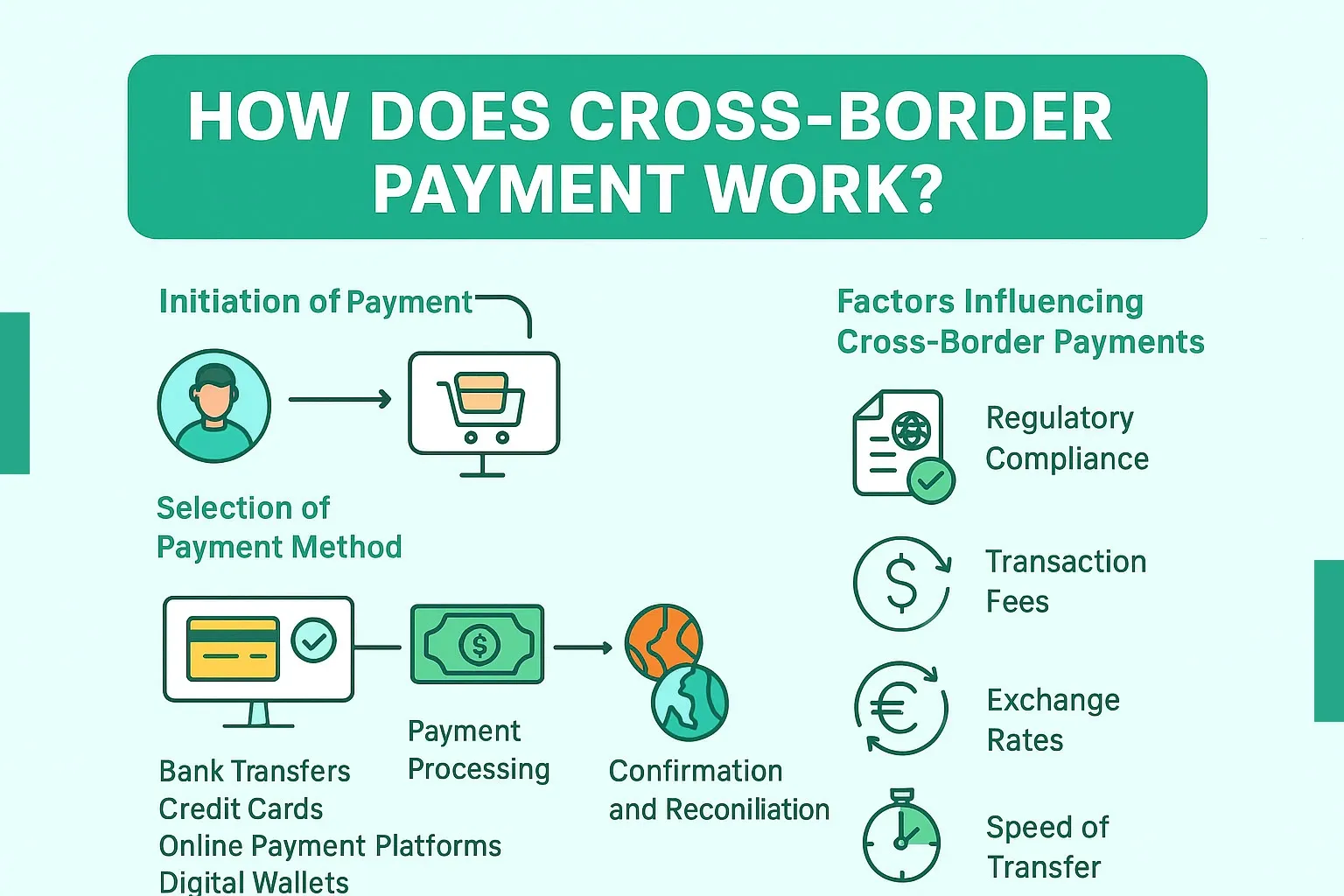
A remittance is a transfer of money from one person or business to another across a border, usually to support a family, pay for a service, or settle an invoice. Behind the scenes, the payment travels through two layers: a messaging layer that carries the instruction between banks, and a settlement layer where the banks actually exchange value through accounts they hold with each other. Most of the cost and delay in a cross-border transfer comes from that settlement layer, not from the message itself.
What a Remittance Actually Is
The word remittance simply describes money sent from one place to another. In everyday use it usually means a cross-border transfer, whether that is a parent funding a child's studies, a business paying an overseas supplier, or a patient settling a hospital bill abroad.
Two distinctions matter when reading about remittances.
Personal and business remittances. Personal transfers are usually smaller, more frequent, and driven by family need. Business transfers are larger, invoiced, and tied to delivery deadlines. The rails are often the same, but the requirements are not.
Outbound and inbound flows. Every corridor has two directions. Payments leaving a country for goods, services, tuition, or property follow one path. Payments arriving to support families follow another. Costs differ sharply between the two directions of the same corridor, which is one reason comparing providers on headline rates is misleading.
Globally, remittance flows are large enough that the World Bank tracks them as a development indicator. The World Bank publishes migration and remittance data by country and corridor, including the volumes that flow annually and the cost of sending to each destination, which is the most reliable public reference on how corridors behave.
How a Cross-Border Transfer Moves
A cross-border transfer is a chain of domestic payments stitched together by messaging. Understanding the chain explains almost every complaint people have about international payments.
Step one: the instruction. You submit a payment to your bank or provider, including the beneficiary name, account number, bank, currency, amount, and often a purpose code. That information becomes a structured payment message.
Step two: messaging. Banks exchange payment instructions across a secure messaging network. The message is fast. It also carries the reference that makes a payment traceable, which is why a missing reference turns tracing into guesswork.
Step three: correspondent debits. Your bank does not hold an account with every bank in the world. It uses a correspondent: a larger bank that holds an account for it and moves value on its behalf. A single cross-border payment may pass through one or two correspondents.
Step four: settlement. Value moves between the banks, usually through accounts held with each other or with a central bank. Domestic settlement systems handle the final leg, and the Bank of England explains how settlement works for sterling payments and why finality, risk, and timing are handled the way they are in a modern payment system.
Step five: local delivery. The beneficiary's bank credits the account. In many corridors this happens on a domestic scheme such as SEPA in Europe or ACH in the United States, both of which are cheap and fast in their own markets. A payment that reaches the beneficiary's bank account on those rails, rather than through a chain of intermediaries with a fee attached at every hop, is the one that arrives with the amount you expected.
Why Remittance Costs Vary So Much
The same transfer can cost a fraction of a percent in one corridor and several percent in another. Four factors explain the difference.
Corridor volume. High volume corridors have more competition and more direct routes. Low volume corridors rely on correspondent chains, and each hop costs money.
Currency pairing. Converting between two widely traded currencies costs less than converting through a currency that must be exchanged twice.
Fixed costs. Every payment carries a fixed component. On a small transfer, a fixed charge can exceed the percentage cost entirely.
Compliance intensity. Corridors with heavier screening requirements take longer and cost more to process, because banks must review more payments manually.
The World Bank publishes a global average cost of sending remittances each quarter through its Remittance Prices Worldwide database. That dataset compares providers, corridors, and transfer sizes, and it is the most useful public benchmark for judging whether a quoted price is reasonable. Providers that disclose their rate and fee before the customer confirms are the ones whose prices can be checked against it.
Speed: Why Two Days and Five Days Both Happen
Timing is a function of the number of steps, not of the amount.
- Cut-off times. Each institution has a daily window. A payment submitted after it waits until the next business day.
- Time zones. A chain crossing three zones can lose a full day to opening hours alone.
- Screening. Large or unfamiliar payments trigger reviews that pause the chain.
- Settlement frequency. Some domestic schemes process in batches, so a payment can sit until the next cycle.
A transfer that passes through one correspondent on a direct route can arrive quickly. A transfer that picks up a second correspondent, a currency conversion, and a manual review will not, even if the sender used the same provider as last time.
Bank Rails Versus Transfer Platforms
Traditional banks and specialist transfer platforms use overlapping infrastructure but present it very differently.
| Aspect | Bank wire | Specialist transfer platform |
|---|---|---|
| Exchange rate | Often not disclosed as a separate line | Usually shown before confirmation |
| Fees | Fixed fee plus correspondent deductions | One disclosed fee, direct delivery |
| Speed | Two to five business days typical | Fast, with fewer hops |
| Limits | May require branch approval above thresholds | Designed for larger and bulk sending |
| Tracking | Reference based, sometimes opaque | Status visible per payment |
Where a Modern Payment Platform Fits
DapsyPay is built around the second column. Payments run on conventional international transfer rails such as SEPA and ACH, the exchange rate and the full fee are shown before you confirm, and the money is delivered directly into the beneficiary bank account. There are no limits that force a large payment to be split across several days, which matters for bulk sending and for business owners paying several recipients in the same month.
The difference that matters most is disclosure. A payment whose total cost is visible before you commit is one you can plan around. A payment whose cost appears only after settlement is one you can only react to.
Choosing How to Send Money Abroad
The following checklist keeps the decision practical.
- Work out the all-in cost. Add the fee and the exchange rate margin, then express it as a percentage of the amount sent.
- Check the delivery window against your deadline. Add a buffer for documentation and cut-off times.
- Confirm who bears intermediary charges. Deductions along the chain reduce what arrives.
- Match beneficiary details exactly. A name mismatch is the most common cause of a returned payment.
- Ask for the payment reference and keep it. It is the only way to trace a stalled payment.
- Check the provider's disclosure. If you cannot see the rate before you confirm, you cannot price the payment.
For the supporting detail on what happens after submission, our guide to sending money abroad from India walks through documentation and timelines for one regulated corridor. Businesses paying overseas staff and agencies should read our guide to paying international contractors, and sellers collecting money from overseas buyers will find the inbound side covered in how to add multi-currency checkout. Readers who want a separate view on transaction costs and account safety will find one in our guide to fees, spreads and safety.
Common Mistakes
- Judging a provider by its fee only. The exchange rate margin usually costs more.
- Ignoring the receiving bank. Some banks charge to accept an international payment.
- Sending without a reference. Tracing becomes guesswork.
- Assuming all corridors behave the same. Costs and timelines vary widely.
- Leaving purpose information blank. Missing detail invites a compliance review.
- Splitting one payment into several. It multiplies fixed costs and delays.
- Using a card for a large transfer. Card conversion is the most expensive route.
Frequently Asked Questions
Conclusion
A remittance is a simple idea delivered by a complicated machine. The message moves quickly, the money moves slowly, and the cost accumulates at every hop between the two.
That is why the practical question is never just how much a provider charges. It is how many steps your payment takes, whether the rate is visible before you commit, and whether the money arrives in the beneficiary bank account without deductions along the way.
Move Money Across Borders With Fewer Hops
Conventional international rails, a disclosed rate and fee, and delivery straight into the beneficiary bank account.
Visit dapsypay.com